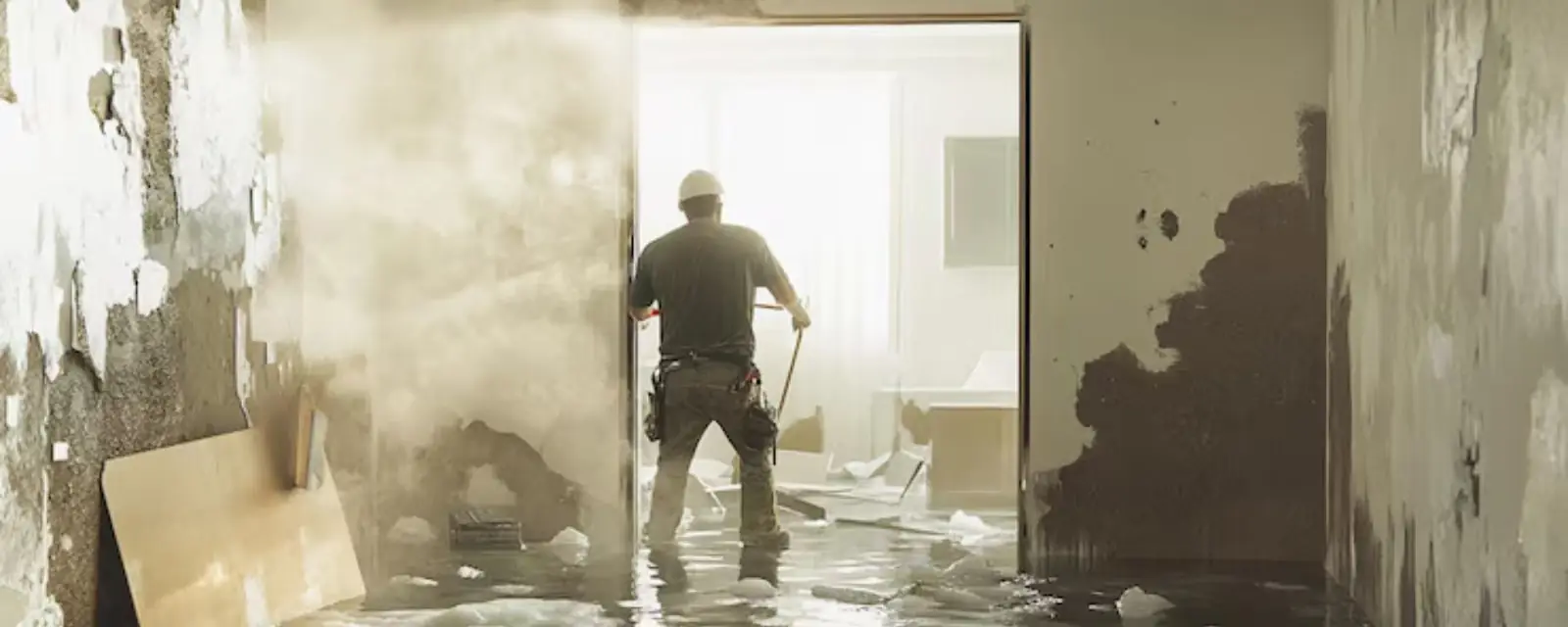
What water damage repair covers once the house is dry
Water damage repair is the rebuild. It starts after extraction and drying are finished, and it replaces whatever the water ruined: drywall, insulation, baseboards, flooring, cabinets and the paint and texture that tie it all together. If water is still on the floor, start with emergency water removal instead, because repairing wet materials only hides the problem.
People call us about repair with a wide mix of problems. A ceiling stain from a roof leak, a soft spot in a wall below a bathroom, hardwood that has started to cup, a kitchen wall damaged by water getting in behind siding. The scope varies, but the sequence does not: confirm the water source is fixed, confirm the materials are dry, then rebuild.
ANSI/IICRC S500 is the published standard that guides drying before repairs begin, and it is fair to ask a company how its crews apply it.
When repair can safely start
A repair done too early traps moisture under new finishes, and the stain or mold returns. A crew checks three things before closing anything up.
- The source is fixed. A roof leak, supply line or condensate line that is still dripping will wreck the new work.
- Moisture readings are back to normal in framing, subfloor and drywall, not just on the surface.
- Any mold growth has been addressed first. If you see dark spots or smell mustiness, read mold remediation before painting anything.
Ceiling and wall water damage repair
A ceiling stain that is brown, spreading and dry may only need stain-blocking primer and paint after the roof or pipe is repaired. A ceiling that sags, bubbles or feels soft is different. Wet drywall loses its strength, and a bowing ceiling can fall without warning, so keep people out from under it and call.
A soft spot in a wall with a hole starting to form, as callers often describe it, means the board has failed and the cavity needs a look.
Repair means cutting out the failed drywall back to dry, sound framing, replacing wet insulation, installing new board and finishing the seams. Matching the old texture takes skill, and so does blending paint across a whole wall or ceiling so a patch does not show.
In the bathroom below an upstairs shower, around a window where siding let water in, and under an HVAC condensate line are the places we see wall and ceiling damage most. Ask the crew to trace the source, not just patch the stain.
Hardwood floors that cup or lift
Cupping happens when boards absorb moisture from below and the edges rise higher than the centers. A backed-up condensate line, a washing machine valve that failed overnight or a slow plumbing leak can all start it. Many cupped floors flatten again when drying is done right and given time, and sanding and refinishing handles the rest.
If boards are buckling, splitting or have lifted off the subfloor, replacement of those sections is more likely. A moisture meter on the boards and the subfloor tells the flooring crew which case they are in.
Repair options and the trade-offs
| Option | Best when | Trade-off |
|---|---|---|
| Patch and repaint | A dry, small stain with no sag and a fixed source | Cheapest, but hides nothing if moisture remains |
| Replace a section of drywall or ceiling | Localized wet or sagging board, dry framing | Texture and paint matching takes care |
| Replace the room finish | Water reached several walls or soaked insulation | Larger scope, more drying verification before closing |
| Sand and refinish hardwood | Cupping that flattened after drying | Needs a stable floor and several days of curing |
| Replace flooring sections | Buckled, split or delaminated boards | Color and finish matching across the room |
The table is a decision framework. Only an inspection tells you which row your house is in.
Want to know what it will take?
Call the 24/7 line. We explain scope and price before work starts, and a crew can look at the damage.
Matching what is already in an older North Richland Hills house
North Richland Hills grew from 16,514 residents in 1970 to 45,895 in 1990, so many homes were built within that window and have decades of paint, texture and trim behind them. Matching a 1970s or 1980s texture takes sample patches and patience, and trim profiles from that era are not always in stock.
If your repair involves structural changes, plumbing or electrical work, ask the city building department what permits apply. The city runs an online E-Services PERMITS Portal and publishes its Code of Ordinances, so you can see how its process works before you hire anyone.
What affects the cost of repair
- How much drywall, insulation and flooring has to be replaced.
- The size and height of ceilings, and how hard they are to reach.
- Texture, paint and trim matching, which adds steps.
- Whether drying and cleanup were done first and documented.
- Hidden conditions found when walls are opened, such as rotted framing.
Sudden and accidental water damage is often covered by homeowners insurance, and gradual leaks and neglect often are not. Your insurer decides coverage, so ask before you rebuild. We explain scope and price before work starts. Want your real number? Call (817) 623-9267.
Where repair fits in the sequence
If your walls are still damp, water mitigation comes first. After drying and water damage cleanup, repair closes the job. We serve North Richland Hills and the neighboring towns, including Colleyville, with the same process.
Questions we hear from North Richland Hills homeowners
When the source is fixed and moisture readings show framing, subfloor and drywall are dry. That can be days after the leak, and a crew checks before closing anything.
The drywall has absorbed water and lost strength. Keep people out from under it and call, because a soft or bowing ceiling can fall. Repair means cutting out the failed board after the leak is fixed.
Often, if drying starts quickly. Cupped floors can flatten once the moisture is out, and sanding and refinishing handle the surface. Buckled or split boards are usually replaced.
It depends on the work. Ask the city building department, which runs an online permits portal, before you start structural, plumbing or electrical repairs.
It should, but matching texture, paint and trim takes sample patches. Older homes sometimes need a full wall repaint so the patch does not show.
It often does for sudden and accidental events. It often does not for long-term leaks. Ask your insurer and keep damaged materials until the adjuster has seen them.