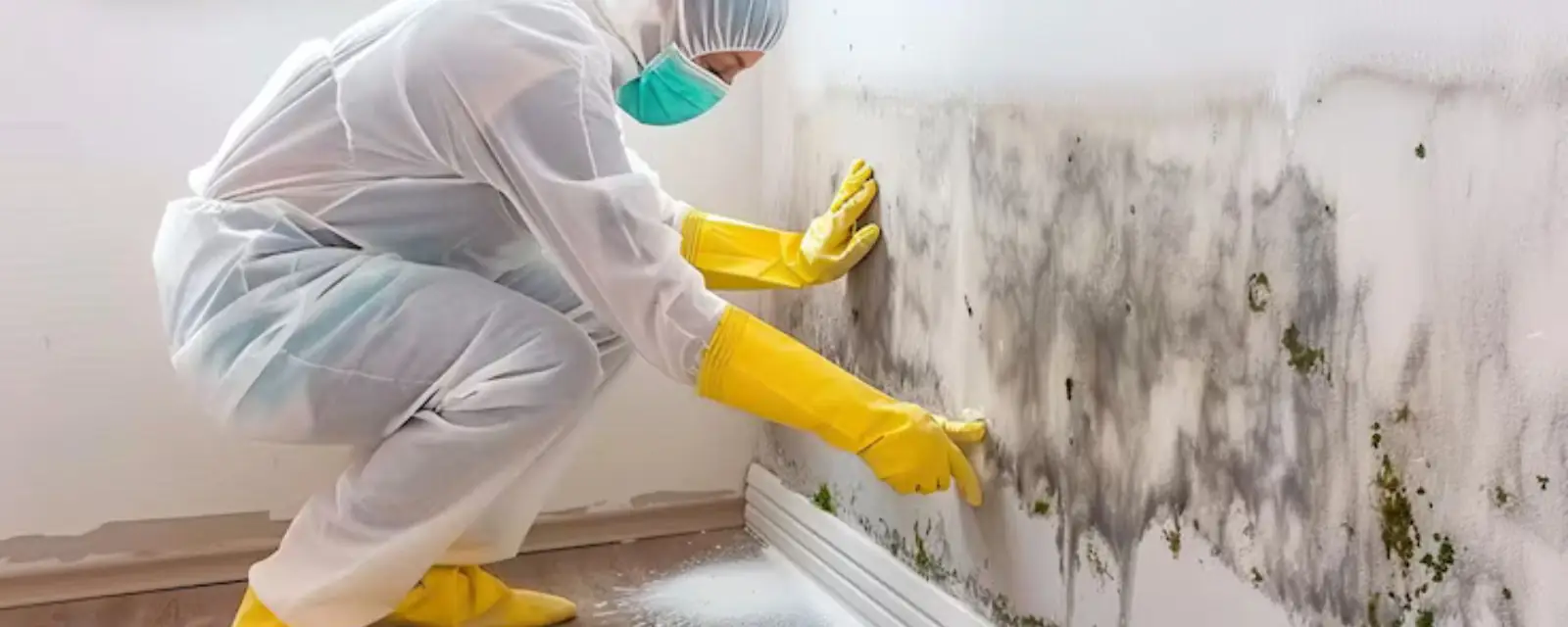
A musty smell, dark spots on a ceiling corner or a closet wall that feels damp?
Those are the signs most people describe before they ever type "mold remediation". A bathroom corner where the wall meets the ceiling, a closet where carpet has stayed damp, the underside of a sink cabinet and a ceiling below an upstairs toilet are the places we hear about most.
Mold remediation is the containment and removal of mold growth in a building, followed by cleaning and checking that the area is ready for repair. Mold cannot grow without moisture, so a job that skips the leak is only a delay. Industry practice for this work is published in ANSI/IICRC S520, and you can ask any company whether its crews follow it.
What mold remediation involves
- Find and fix the moisture. A leak, a condensate line, a roof opening or a humidity problem has to be stopped, or the growth returns.
- Contain the work area. Plastic barriers and negative air machines keep spores from drifting into the rest of the house.
- Remove affected materials. Porous materials such as drywall, insulation and carpet are cut out and bagged. Hard surfaces are cleaned.
- Filter the air. HEPA air filtration runs during and after the work to capture airborne particles.
- Clean and dry. Surfaces are cleaned and the structure is dried so the moisture does not return.
- Verify. The crew checks moisture and visual conditions, and an independent test is an option if you or a buyer want one.
Ask for the scope in writing before work starts, including what will be removed, how the area will be contained and who will check that it is finished.
Mold after water damage
Most mold we hear about started with a wet event. A toilet supply line, an air conditioner condensate line, a roof leak or a pipe under a bathroom sink soaked a wall or carpet, and nobody dried it fully. Callers describe a localized spot, a ceiling below an upstairs bathroom or a closet wall at first.
The EPA advises drying wet materials within 24 to 48 hours to keep mold from starting. When that window passes, drying alone may no longer be enough, and removal enters the plan. If a recent leak is the cause, water mitigation stops the moisture and water damage cleanup removes soaked materials.
Once the area is dry and the growth is removed, water damage repair rebuilds the drywall, flooring and paint.
Mold removal and black mold cleanup
"Black mold" is a color description, not a diagnosis. Mold in many colors can grow on drywall, wood, grout and insulation, and color alone does not tell you the species or how it should be handled. Treat any growth the same way: stop the moisture, contain the area and remove porous materials.
Wiping a small spot of surface growth on a hard, nonporous surface is something many homeowners handle. Growth on drywall, ceiling tiles, carpet or insulation, or a patch that returns after cleaning, points to moisture inside the material. Bleach does not fix that and paint only covers it. Health questions about exposure belong with a physician, not with a restoration company.
Testing, inspection and clearance
Callers often ask whether they need testing, and the answer depends on what they are trying to learn. A visual inspection and moisture readings tell a crew where growth is and why. Air or surface sampling can add information, but it does not remove anything, and it does not replace finding the moisture.
Clearance testing after remediation is a separate step some owners want, and it is common when a home is being sold or financed. Lenders and buyers sometimes ask for proof that mold was removed. We can explain what a remediation scope includes, but we cannot promise what a lender will accept.
Ask any company how testing is handled on your job, who performs it and whether it is separate from the cleanup. Ask TDLR how the state rules apply to your situation.
Which situation are you in?
| What you see | What it often means | Sensible next step |
|---|---|---|
| Small spot on a hard surface, dry area | Surface growth with a limited cause | Find the moisture, clean carefully and monitor |
| Stain on drywall or ceiling, soft or bubbling | Moisture inside the material | Call for inspection and moisture readings |
| Musty smell with no visible source | Hidden moisture in a wall, floor or ceiling cavity | Inspection with meters and a thermal camera |
| Carpet damp for days in a closet | Pad and carpet are wet | Removal and drying, then a check for growth |
| A sale or loan is waiting on the answer | A document is needed | Ask about scope and clearance testing early |
Want someone to look at it?
Call the 24/7 line. We explain scope and price before work starts, and a crew can inspect the moisture source.
Texas mold rules and what to ask a company
Texas regulates mold assessors and remediators under Chapter 1958 of the Occupations Code, and the Texas Department of Licensing and Regulation licenses them. A 2025 law, SB 1255, took effect on September 1, 2025. It repealed the provision that let an unlicensed employee do mold work while supervised by a license holder, and TDLR says current rules remain in effect while it reviews the program.
So before you sign, ask the company whether it holds the Texas license that applies to the work and how its crews handle the job. If you are unsure how the rules apply to your project, TDLR takes questions at mold.inspections@tdlr.texas.gov. North Richland Hills also runs an online permits portal, and the city building department can tell you whether your repairs need a permit.
What affects the cost of mold remediation
- How much surface area and which materials are affected.
- Whether the growth is surface level or inside walls and ceilings.
- Containment, negative air and HEPA filtration needs.
- Moisture source repair and drying time.
- Rebuild scope after removal, including testing if it is requested.
Insurance coverage for mold varies a great deal by policy, and some policies limit or exclude it. Check your policy, ask your insurer and keep records of the leak. Want your real number? Call (817) 623-9267.
Serving North Richland Hills and nearby towns
Mold calls come from older homes near Smithfield and the Cummings Drive area and from newer subdivisions alike, because a leak does not care about the age of the house. We also dispatch to Keller, Hurst and the neighboring cities. If your mold started with a flood, flood damage restoration explains the contaminated-water steps.
Questions we hear from North Richland Hills homeowners
Sooner is better, because growth spreads while moisture is present. Stop the moisture source first, and call for an inspection if you see growth on drywall, ceilings or carpet.
Bleach does not solve moisture inside drywall or carpet, and surface cleaning will not stop growth that is fed from behind. A small spot on a hard surface can be cleaned carefully, but anything that returns needs the cause found.
Not always. A visual inspection and moisture readings often show what is happening. Testing can be useful for a sale, a loan or a dispute. Ask how it would be done and who would do it.
No company can promise that. Remediation removes growth, and the moisture source decides the rest. If the leak or humidity problem is fixed and the area stays dry, the conditions that feed mold are gone.
Questions about health effects belong with a physician. A restoration company can remove growth and explain what was found, but it cannot diagnose a health condition.
Texas regulates mold assessors and remediators under Chapter 1958 of the Occupations Code. Ask the company whether it holds the license that applies to the work, and ask TDLR how the rules apply to your project.
Coverage varies a great deal by policy and by cause. Some policies cover mold after a covered water loss and limit it, and others exclude it. Read your policy and ask your insurer.