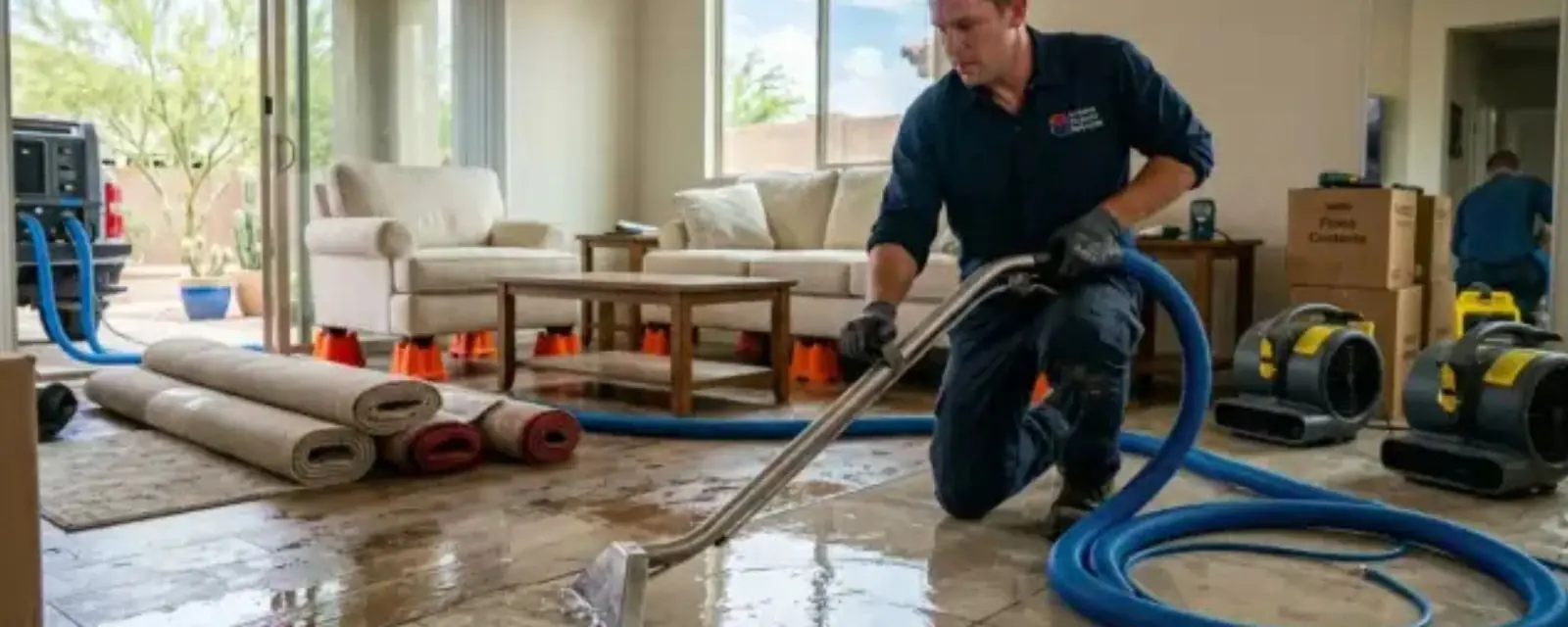
Water on the floor right now: what to do in the next ten minutes
Standing water is an emergency, and the number is open 24/7. While you wait for a crew, find the main water shutoff and close it, move electronics and small valuables up off the floor, and keep everyone out of rooms where water is touching outlets or the panel. If you cannot tell whether it is safe to cut power, leave the panel alone and call your utility or 911.
Emergency water removal means getting the water out of the structure quickly, before it soaks drywall, pad and subfloor. Pumps clear deep water, and extraction units pull the water out of carpet and off hard floors. It is the first physical step on most losses, and it comes before drying.
- Close the main water valve, or the fixture shutoff if you know where it is.
- Do not step into water near outlets, appliances or the electrical panel.
- Lift furniture legs, rugs and boxes off wet floors if you can do it safely.
- Take photos and video of the water level and the source before cleanup begins.
- Call (817) 623-9267 and tell the dispatcher how deep the water is and where it came from.
What the equipment does
Portable extraction units handle shallow water on tile, vinyl and carpet, and submersible pumps move deeper water such as a flooded garage or a lower level. Truck-mounted units are used when there is a lot of water to move or a large carpeted area to pull. A crew chooses the tool from the depth and the surface, not from a fixed routine.
After the visible water is gone, moisture meters check what the extraction missed. Wet pad is usually cut out and discarded, and baseboards are often pulled so air can reach the wall bottom. From there the job hands off to water mitigation, where air movers and dehumidifiers dry the structure.
Burst pipe water damage
A burst supply line or a failed fitting can release many gallons a minute, and the water finds the lowest route. It runs along the slab edge, drops through floors and ceilings, and soaks the bottom of every wall it touches. Under-sink supply lines, water heaters and washing machine hoses are among the most common causes.
Speed matters most with a burst pipe. Shutting the supply stops the flow, but the water already in the house needs extraction right away. Keep the failed part in a bag if it is safe to handle, because your insurer may ask to see what failed, and photograph the break before the plumber repairs it.
If the pipe burst in a wall or ceiling, expect the crew to open a small access point so trapped water can drain and cavities can dry. That is routine and far less costly than leaving a wet cavity closed.
Water categories decide the plan
The source of the water changes what is safe to keep. This framework follows the categories used in ANSI/IICRC S500.
| Category | Typical source | What it means for the job |
|---|---|---|
| Category 1 | Broken supply line, tub overflow with clean water | Extraction and drying can often save carpet and finishes if started fast |
| Category 2 | Washing machine or dishwasher discharge, toilet overflow without solids | Extraction, cleaning and antimicrobial treatment, with more materials removed |
| Category 3 | Sewage backup, creek or river water, standing water for days | Contaminated. Porous materials are removed, and the job follows a stricter protocol |
Day or night: when crews respond
Dispatch is open 24/7, and same-day response is available when crews are free. We will not give you a made-up arrival window. What we can do is get your address, ask about depth, source and electrical exposure, and tell you what to do while the crew is on the way.
We dispatch to North Richland Hills and to Haltom City, Hurst, Keller and Colleyville. If you live near Mid Cities Boulevard, Bedford-Euless Road or Precinct Line Road, the same line answers.
How scope and price are explained
Before work starts, the dispatcher or the crew lead explains the scope in plain terms: what will be extracted, what will be removed and what drying is expected. Price follows the scope, and four things drive it.
- The depth and volume of the water, and the water category.
- Square footage of wet flooring and walls, and how many rooms it reached.
- How much carpet, pad, drywall or insulation has to come out.
- How many drying days follow the extraction.
Insurance is explained in general terms only. Sudden and accidental water damage is often covered, gradual leaks often are not, and flood damage usually needs separate flood coverage. Ask your insurer before you rely on it.
Burst pipe or flooded room?
Call the 24/7 line now. A dispatcher walks you through the first steps while we line up a crew.
After the water is out
Extraction is only the start. Once standing water is gone, water damage cleanup removes debris and contaminated materials, and water damage repair rebuilds the finished surfaces. If the water was from a creek or heavy rain, flood damage restoration covers the extra safety and sanitizing steps.
Questions we hear from North Richland Hills homeowners
Yes. Dispatch answers every hour of every day. We offer same-day response when crews are available but never promise a specific arrival time, so the dispatcher focuses on what you can safely do before the crew gets there.
As fast as is safe. Pad, drywall and subfloor start absorbing water immediately, and the damage grows with every hour of waiting. Call as soon as the source is stopped.
A household wet vac can help with a small spill, but it cannot keep up with a burst pipe, and it will not reach water in pad, subfloor or wall cavities. Never use one near water that touches outlets or the electrical panel.
Stay out of it and call. Water from a sewer line, a toilet with solids or a creek is contaminated, and the crew follows a stricter plan. Call your utility or 911 first for any gas or electrical risk.
Sometimes. If water is trapped behind baseboards or inside a wall, a small opening lets it drain and lets air in for drying. The crew explains where and why before cutting.
It often does for sudden and accidental events, such as a burst pipe. It often does not for slow leaks, and flood damage usually needs a separate flood policy. Check your policy and ask your insurer.