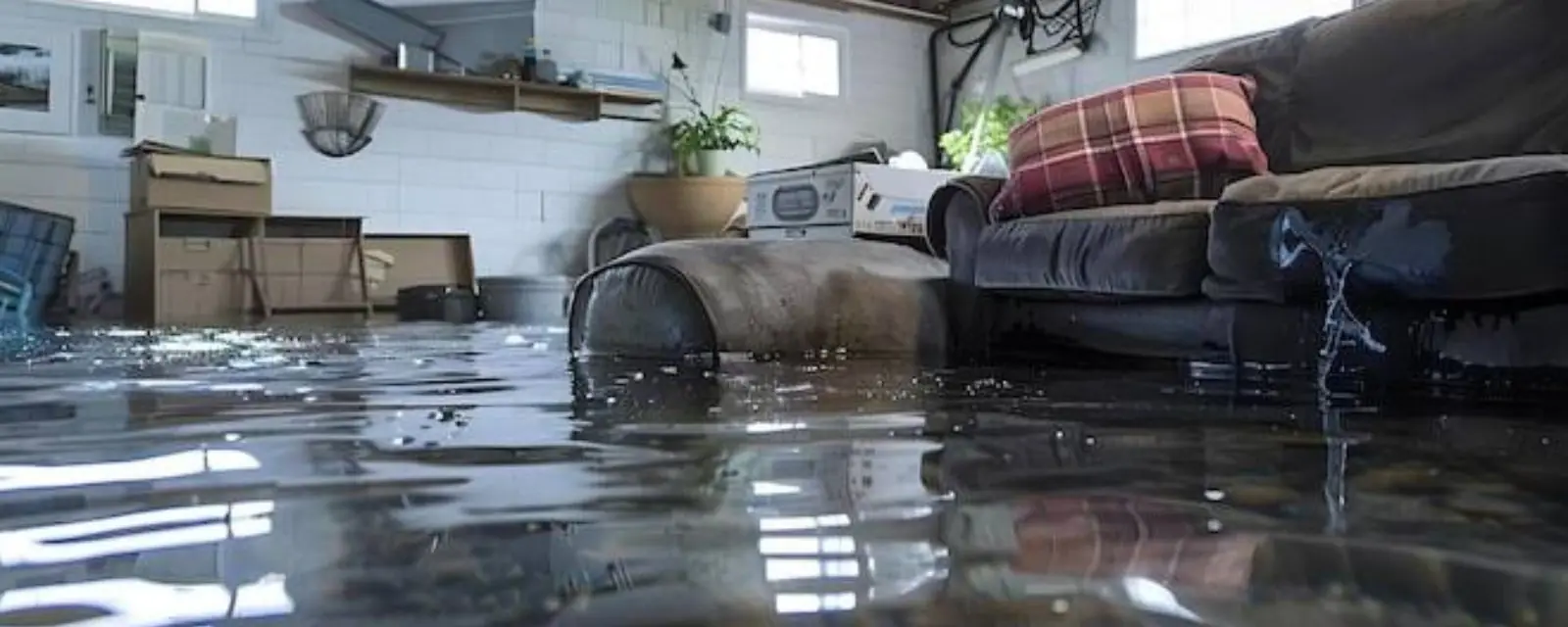
Flood water in the house: stay out and call first
Flood water is an emergency, and the number is open 24/7. If water is entering from outside or a drain, do not walk through it. Turn off power at the panel only if you can reach it standing on dry ground, and call your utility or 911 for any gas or electrical risk before calling us.
Flood damage restoration is the removal of storm, creek or groundwater and the cleanup and drying that follow. It differs from a burst pipe because the water is usually contaminated, it can carry silt and sewage, and the plan has to treat it that way. Crews decide what stays and what goes based on the water category used in ANSI/IICRC S500.
When flooding is an emergency
Call right away if water is rising, if it came from outside the house, if sewage is involved or if the floor of a lower level or garage is under water. Do not wait to see whether it recedes.
Keep people and pets out, and do not run fans or vacuums through water. We offer same-day response when crews are free and answer after-hours calls through dispatch. We do not make up an arrival time, but we will tell you what to do while the crew is on the way.
Why flood water is different
| Source | Water category | What it usually means |
|---|---|---|
| Storm runoff or creek water entering the house | Category 3 | Contaminated. Porous materials are removed and surfaces sanitized |
| Sewer or drain backup | Category 3 | Raw sewage risk. Stay out and call |
| Rain through a storm-damaged roof | Category 1 or 2, depending on time and path | Often handled like a leak, but insulation and ceilings may be lost |
| Groundwater seepage into a lower level | Category 2 or 3 | Extraction, drying and a check for mold risk afterward |
The table is a decision framework. A crew confirms the category on site.
Basement and lower-level flooding cleanup
Whether a house has a basement, a crawl space, a walkout level or a finished garage, any low area can take on water. Flood water in a lower level settles into carpet, drywall, stored boxes and the bottom of every wall, and it can sit for days if the homeowner is away.
The crew pumps out standing water, pulls wet carpet and pad, removes drywall below the water line and dries the framing and slab. They also look for the entry point, such as a window well, a failed sump or a drain. Fixing that entry point keeps the next storm from repeating the loss.
Do not run a household vacuum or fans in a flooded room. Photograph the water line and the belongings before they are moved.
Sewage backup cleanup: what to do first
If a drain backs up and raw sewage is on the floor, treat it as a health-safety job. Do not wade through it or try to mop it. Keep children and pets out, avoid using the affected plumbing and call the 24/7 line. Call your water utility if the backup may be coming from the public line.
The crew extracts the water, removes porous materials such as carpet, pad and low drywall, cleans and applies antimicrobial treatment, and dries the structure. Anything that touched sewage and cannot be cleaned, such as insulation or upholstered furniture, is usually disposed of. Documentation helps with your insurer, so take photos before removal.
Flood water in your home?
Call the 24/7 line now. We will explain the first safe steps and send a crew.
North Richland Hills flood facts worth knowing
The city maintains a drainage system that carries storm water to creeks and channels, and says homeowners inside and outside floodplains can have drainage problems. Its flood maps show creek and channel flooding, not undersized drainage or poor lot grading, which can flood a yard or garage outside the mapped floodplain.
The city says over a 30-year mortgage there is a 26 percent chance of flooding in the 1 percent chance floodplain, and that more than 20 percent of National Flood Insurance Program claims come from properties outside the floodplain. That is why check the FEMA flood map for your address is only the start, and a flood policy question belongs with your insurer.
To see whether an address is in the mapped floodplain, the city offers an interactive map and a floodplain determination letter through Public Works Engineering at 817-427-6400. Big Fossil Creek, which runs through Richland Hills and Haltom City, produced the largest flood in Richland Hills since at least 1900 on September 7, 1962, according to the U.S. Geological Survey, which is a reminder that creek flooding is a regional risk.
Flood coverage and the cost of restoration
Homeowners policies generally do not cover flood damage, and the Texas Department of Insurance says most home and renters policies leave flood out. National Flood Insurance Program claims have to be filed within 60 days, according to TDI, so read your policy early.
Restoration cost follows the scope. These factors move it most.
- The water category, which for flood is usually contaminated.
- The area and depth of the water, and how many rooms it reached.
- How much drywall, insulation and flooring has to come out.
- The drying days and equipment the readings call for.
- Rebuild scope once the structure is clean and dry.
If you want your real number, call (817) 623-9267. We explain scope and price before work starts.
From flood to finished
After extraction, water mitigation dries the structure, water damage cleanup sanitizes and deodorizes, and water damage repair rebuilds. If water sat for days and you see growth, mold remediation comes into the plan. We dispatch across North Richland Hills and to Haltom City and nearby towns.
Questions we hear from North Richland Hills homeowners
Yes. Dispatch answers 24/7. We offer same-day response when crews are free and never promise a specific arrival time. The dispatcher will tell you what to do while you wait.
It can be contaminated, so avoid contact, wear gloves and boots if you must go in and wash thoroughly. Health questions belong with a physician. Do not enter if water is near outlets or the panel.
Usually carpet, pad, insulation, low drywall and anything porous that touched contaminated water. Hard, nonporous items can often be cleaned and kept.
Generally not. The Texas Department of Insurance says most home and renters policies do not cover flood, which usually needs a separate flood policy. Ask your insurer.
The City of North Richland Hills offers an interactive map and a floodplain determination letter through Public Works Engineering at 817-427-6400. You can also check the FEMA flood map for your address.
Yes. The city says its maps show creek and channel flooding and do not show drainage problems or poor lot grading, and more than 20 percent of National Flood Insurance Program claims come from outside the floodplain.