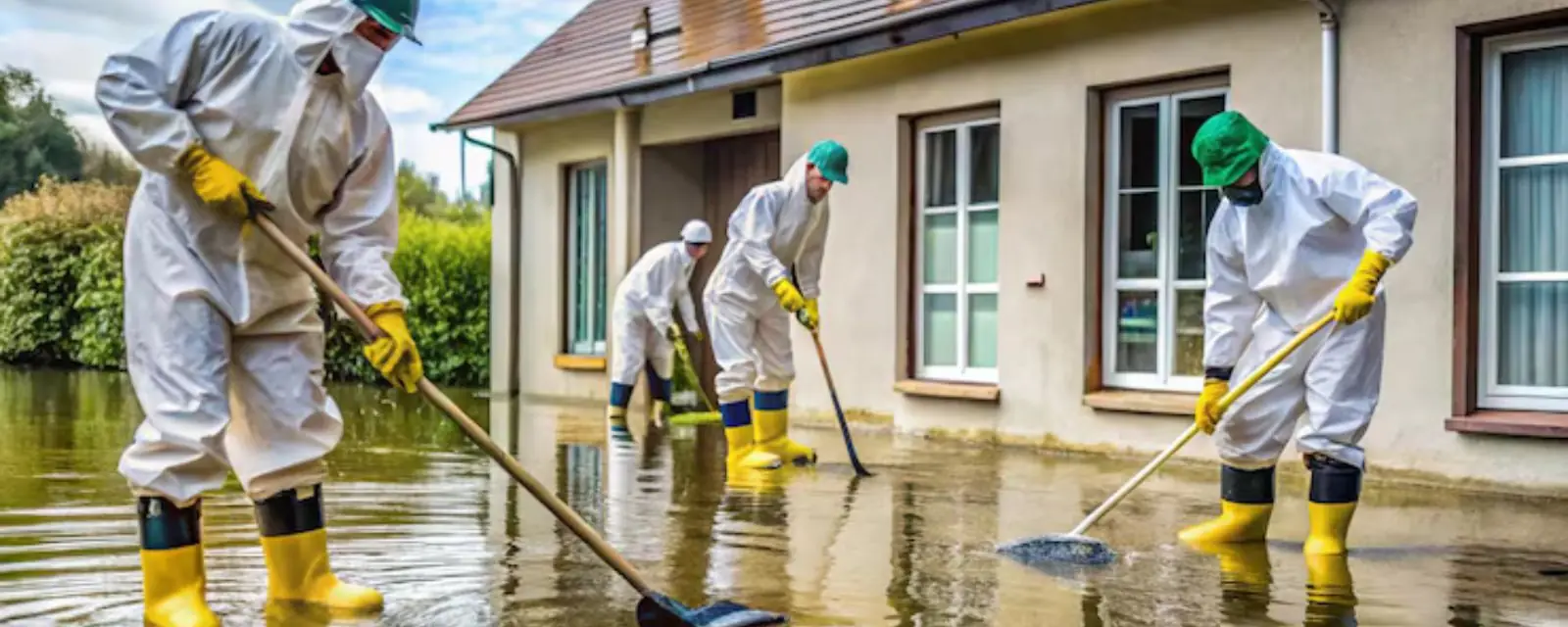
Water is stopped, but the house is still a mess: what cleanup covers
If water entered your home within the last 48 hours, cleanup is time-sensitive, and our line is open 24/7. While you wait, keep children and pets out of wet rooms, open windows if the weather allows, wear gloves and boots around dirty water and set aside anything you want a crew to inspect rather than throw away.
Water damage cleanup is the removal of water, debris and damaged materials, followed by cleaning, sanitizing and odor control. It follows water mitigation, which stops the spread and dries the structure, and it comes before the rebuild. The goal is a clean, dry shell that is ready for repair.
Cleanup follows the water categories described in ANSI/IICRC S500, the published standard for professional water damage restoration.
The cleanup sequence, in order
- Sort and protect. Contents are separated into salvageable, questionable and disposable, and valuables are moved to dry areas.
- Remove what cannot be saved. Wet pad, soaked insulation, swollen drywall and contaminated materials leave the house in bags.
- Clean surfaces. Floors, studs and salvageable finishes are cleaned of silt, residue and staining.
- Sanitize. Antimicrobial treatment goes on surfaces that touched anything beyond clean supply water, as the water category requires.
- Control odor. Deodorizing follows the removal, because covering odors before the source is gone does not work.
- Verify. Moisture readings confirm the area is dry enough to rebuild.
The first 48 hours matter most
Water damage cleanup carries urgency because damp materials turn into mold food quickly. The EPA advises drying wet materials within 24 to 48 hours to keep mold from starting, and many cleanups are about beating that clock.
That is why we ask callers to describe how long water has been in the house. A room that was wet this morning needs different work than one where carpet has been damp since last weekend. We also ask what the water was: a supply line, a washing machine, a toilet or a drain.
Cleanup choices by water category
| What touched the water | Typical cleanup approach | Common results |
|---|---|---|
| Clean supply water, caught fast | Extract, remove pad, dry in place, wipe and deodorize | Carpet and flooring may be saved |
| Appliance discharge or gray water | Clean and antimicrobial treatment, more materials removed | Carpet is often removed, hard surfaces cleaned |
| Sewage or creek water | Remove porous materials, clean and sanitize, protocol-driven | Drywall, insulation and carpet usually go |
| Water left for several days | Treat as contaminated, assess for mold | Expect more removal than the first estimate suggests |
The table is a decision framework. A crew confirms the category and the materials on site.
Contents, odors and what homeowners can handle
Hard, nonporous items such as glass, metal and sealed plastics can usually be washed and returned. Upholstered furniture, mattresses and paper items from dirty water are rarely worth keeping. Photograph anything you plan to claim before it is thrown out.
Odors tell you something is still wet or contaminated. If a musty smell returns after cleaning, ask the crew to recheck the wall cavity and subfloor, because that smell usually comes from moisture left behind. If you see growth, the mold remediation page explains what changes.
For your own protection, wear gloves, boots and a mask when handling wet debris, and do not mix cleaning products. If you smell gas or see damage near electrical equipment, leave and call the utility or 911.
Need a crew to clean up?
Call the 24/7 line. Scope and price are explained before work starts, and same-day response is available when crews are free.
Cleanup after storms, freezes and plumbing failures in North Richland Hills
The National Weather Service normal for Dallas/Fort Worth is 37.01 inches of rain a year, and the station averages 29 freezes per season. Roof leaks after storms and burst supply lines after a hard freeze are two reasons North Texas homeowners search for cleanup in the same week.
North Richland Hills Public Works maintains about 292 miles of sewer lines, and the city directs sewer questions to its Utilities Division at 817-427-6440. If wastewater backs up inside your home, tell the dispatcher, because the cleanup becomes a contaminated-water job with stricter handling.
What affects the cost, and what insurance may do
Cleanup cost follows the scope. A few facts move it more than any others.
- The water category and how long the water sat.
- Affected square footage and number of rooms.
- How much carpet, pad, insulation and drywall has to be removed and hauled away.
- Contents handling and how much sanitizing the category requires.
- How many drying days or follow-up visits readings call for.
Sudden and accidental water damage is often covered by homeowners insurance, gradual leaks and neglect often are not, and flood damage usually needs separate flood coverage. Check your policy, document the damage and ask your insurer. Want your real number? Call (817) 623-9267.
What comes next
When the cleanup is finished and the structure reads dry, water damage repair replaces drywall, flooring, trim and paint. If the water came from rising creek water or heavy runoff, flood damage restoration covers the extra safety steps. We serve Keller and the other nearby cities with the same crews and process.
Questions we hear from North Richland Hills homeowners
Yes. The line is answered 24/7. Same-day response is available when crews are free, and we do not promise a specific arrival time.
Mitigation stops the damage from spreading and dries the structure. Cleanup removes debris and damaged materials, sanitizes surfaces and controls odor. Many jobs use both, and the order is mitigation first, then cleanup, then repair.
Sometimes. Carpet exposed to clean supply water for a short time can often be saved, but the pad is usually replaced. Carpet exposed to contaminated water is usually removed.
Find and remove the wet or contaminated source, then deodorize. A smell that comes back means moisture is still trapped in a wall, floor or cavity, and the crew should recheck it.
Photograph them first. Your insurer may want to see damaged items, so keep them until the adjuster has looked or has said disposal is fine.
It often covers sudden and accidental events and often does not cover slow leaks. Flood damage usually needs separate flood coverage. Ask your insurer and read your policy.