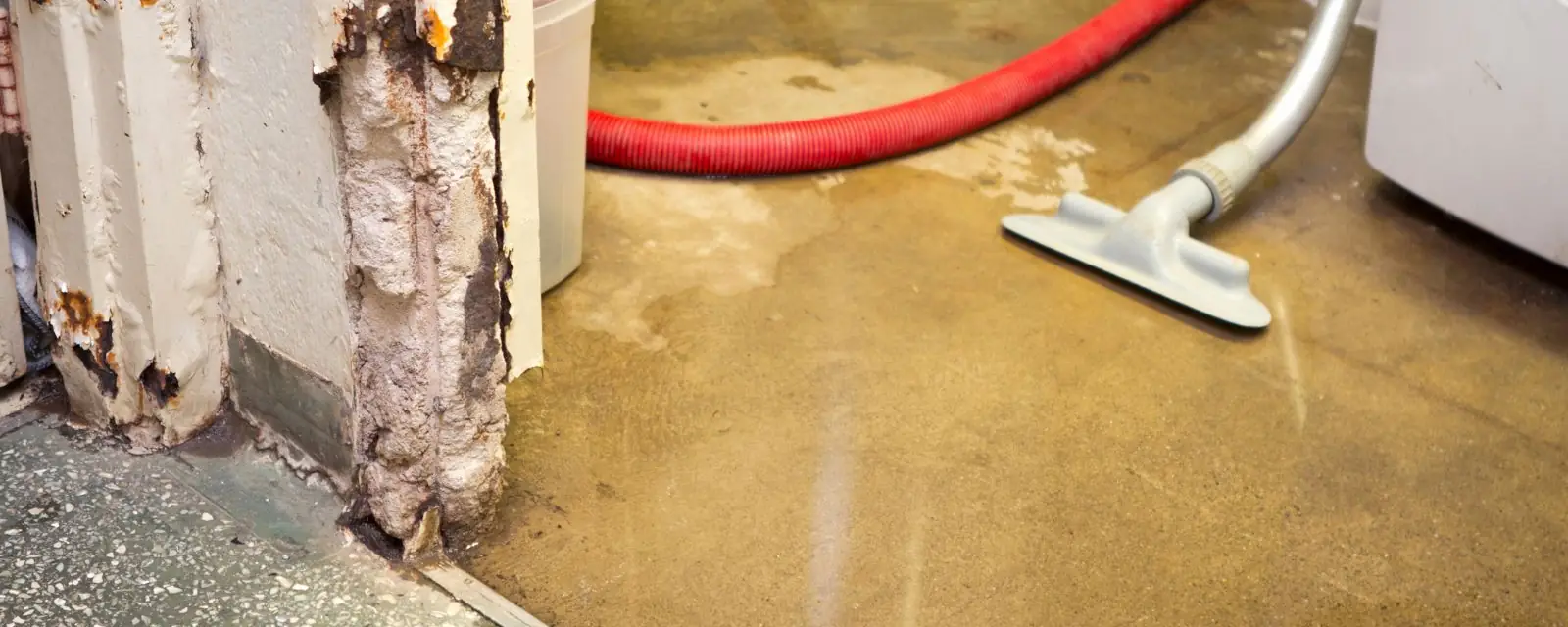
What extraction and structural drying involve
Water extraction removes standing water and soaked material from a building. Structural drying then pulls the moisture that remains out of drywall, framing and flooring. They are two stages of one job, and a company that offers only the first leaves the second to chance.
Standards matter here. ANSI/IICRC S500 is the published industry standard for water damage restoration, and a good company can explain its steps in those terms. Ask for a written scope that names both stages.
The first hours matter most. Water moves into baseboards, wall cavities and subfloors quickly, and every hour it sits widens the area that has to be dried. That is why dispatch comes before the paperwork, and why scope can be adjusted once the crew measures.
Truck-mounted versus portable extraction
The right equipment depends on how much water there is and how the building is laid out. The table compares the common choices.
| Equipment | Best for | Limits |
|---|---|---|
| Truck-mounted extractor | Large volumes on carpet and open floors | Needs hose access from the vehicle |
| Portable extractor | Upper floors, small rooms, tight access | Smaller capacity, slower on large areas |
| Submersible pump | Deep standing water in a garage or basement | Leaves a thin film that still needs extraction |
| Wet vacuum | Small spills and edges | Not enough for a whole room |
Most real jobs use more than one. A pump clears the depth, an extractor pulls water from carpet and floors, and a wet vacuum handles corners.
Pad removal, flood cuts and drying chambers
Carpet pad holds water like a sponge and often comes out even when the carpet can be saved. Drywall that has wicked water upward may get a flood cut, which is a horizontal cut a set height above the floor so wet board and insulation can be removed and the cavity can dry.
A drying chamber is a closed-off area, sealed with plastic, so the equipment dries the affected rooms instead of the whole house. Doors and vents are managed so the dehumidifier works on a smaller air volume. That setup is one reason scope matters, because it tells you where the crew will work.
Some materials need special handling. Hardwood may be dried with mats that pull water up through the boards, and plaster or thick framing dries slowly. Ask the crew which materials they expect to save and which they expect to remove, and ask what readings will change that plan.
Standing water in the house?
Call the 24/7 line. We can dispatch a crew, and scope and price are explained before work starts.
Dehumidifiers, air movers and documentation
Air movers push air across wet surfaces. Dehumidifiers remove the moisture those surfaces release. Refrigerant types work well in warm, humid rooms, and desiccant types suit cooler or very dry conditions. A crew should choose by the room, not by whatever is on the truck.
Documentation shows the work happened. Without it, you have no way to confirm what was dried or for how long. Expect starting moisture readings, daily readings on repeat visits, photos and an equipment log. When extraction ends and the drying phase begins, water mitigation explains the routine, and water damage cleanup covers debris and sanitizing.
Questions to ask any company
These questions work whether you are calling us or someone else. A company that answers them plainly, and in writing, is usually the one that will explain the job again when you have follow-up questions on day three.
- Will the scope be in writing before demolition starts?
- What extraction equipment will be used, and why for this job?
- Which materials will come out, and which will be dried in place?
- What dehumidifier and air mover setup is planned, and where?
- What readings will be recorded, and will you receive the log?
- How will price be explained, and what could change it?
How scope and price should be explained
A good estimate has the work in lines you can understand: extraction, removal of named materials, equipment days and verification. Ask what would change the number, such as finding wet insulation behind a wall. We explain scope and price before work starts, and you should ask any company to commit to the same.
Ask whether equipment charges are tied to the readings or to a fixed number of days, since that tells you whether the company plans to stop when the building is dry. Do not sign anything you have not read. If a form changes who gets paid by your insurer, ask your insurer what it means. A company that rushes you through paperwork while water is still on the floor is treating the signature as the job.
Keep copies of the scope, the readings and the final invoice together. They are the record you will want if your insurer asks questions later.
North Richland Hills notes: floodplain numbers and storm drainage
The city's Floodplain FAQ says there is a 26 percent chance of flooding over a 30-year mortgage in the 1 percent chance floodplain, and that more than 20 percent of National Flood Insurance Program claims come from properties outside the floodplain. It also says the maps cover creek and channel flooding, not undersized drainage or poor lot grading. So a home outside the mapped floodplain can still take water in a hard rain.
The city maintains a drainage system that carries storm water to creeks and channels, and Public Works staff will meet residents about drainage problems. If your yard or garage floods in heavy rain, that conversation is worth having. If water from outside enters the house, extraction crews treat it as contaminated, so keep out of it and call before you start moving things. Ask your insurer which policy responds.
Serving the towns next door
The same crews can be dispatched to Keller and Colleyville, and the questions above apply there too. If water entered from a storm or creek, emergency water removal is the first call, and flood damage restoration covers the larger job.
Questions we hear from North Richland Hills homeowners
Check the city's Interactive Map, or call Public Works Engineering at 817-427-6400 for a floodplain determination letter. A home outside the mapped floodplain can still have drainage flooding.
No. Extraction removes standing water, and the structure still holds moisture. Drying continues until readings confirm dry materials.
It depends on the water category and how long it stayed wet. Clean-water carpet can sometimes be dried in place, but the pad is often removed.
A horizontal cut in the drywall a set height above the floor, so wet board and insulation can come out and the wall cavity can dry.
Sealing creates a drying chamber, so dehumidifiers work on a smaller volume of air and dry the affected materials faster.