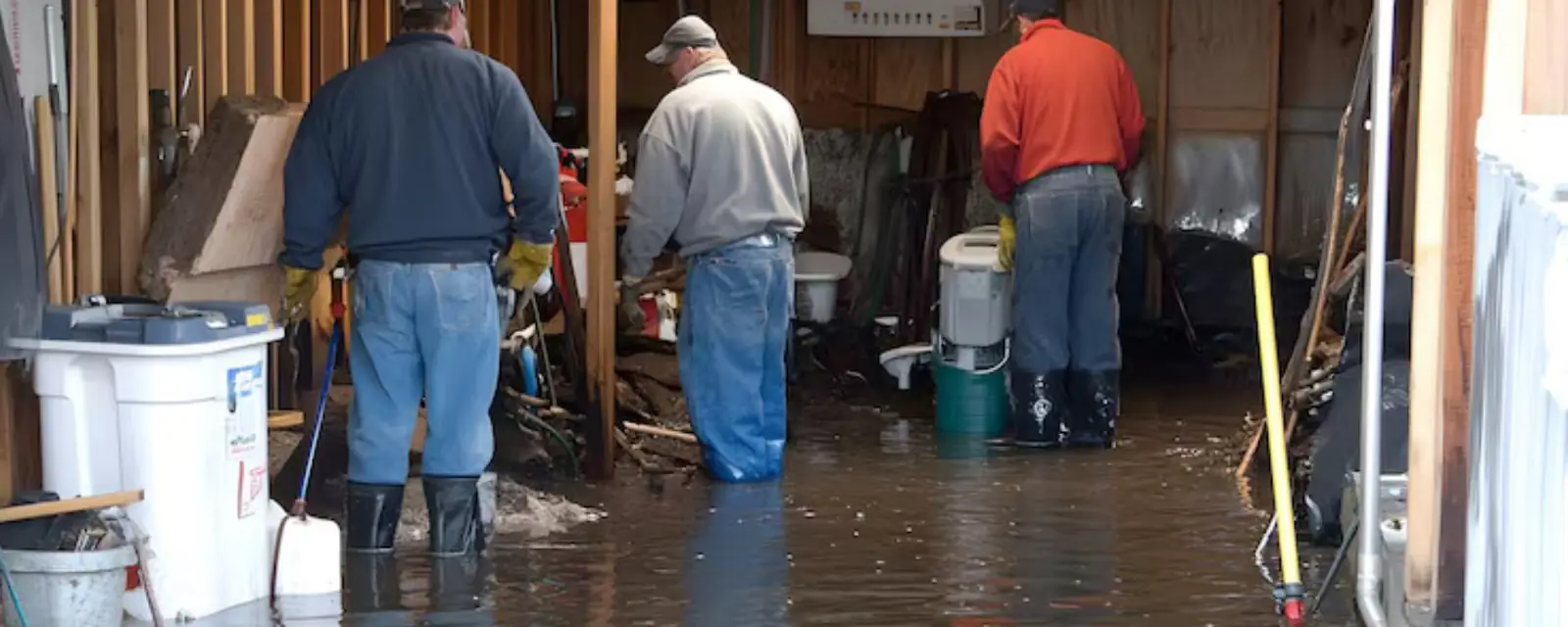
The short version of the process
Water damage restoration runs in nine stages: safety and shutoff, inspection, water category, extraction, removal of ruined materials, drying, monitoring, cleaning and rebuild. Each stage hands off to the next, and skipping one tends to show up later as odor, mold or buckled floors.
The industry reference is ANSI/IICRC S500, the published standard for professional water damage restoration. Below, each stage is explained the way a project manager would walk you through it at the kitchen table.
Two things stay true through every stage. The clock matters, since wet drywall, insulation and flooring begin to break down within days. And paper matters, since photos, readings and a written scope protect you with the crew and with your insurer.
What to do before the crew arrives
- Shut off the water at the main valve if a pipe is the source.
- Keep out of rooms where water touches outlets or the electrical panel.
- Lift small valuables and electronics off wet floors.
- Photograph each wet room before anything is moved.
Stages one to three: shutoff, inspection and water category
First, someone stops the source. For a supply line, that means the main valve or the fixture shutoff. If water is near the electrical panel, call 911 before touching anything.
Second, the crew inspects with a moisture meter and often a thermal camera, then maps which walls, floors and ceilings are wet. Third, the crew assigns a water category. Category 1 starts clean, Category 2 carries some contamination, and Category 3 is grossly contaminated, such as sewage or creek water.
The category sets the plan, so ask what category the crew assigned and why. You should also see a sketch or list of the affected rooms before equipment arrives.
A thorough inspection takes longer than a glance at the stain. The crew checks the wall behind the baseboard, the floor under the rug and the ceiling below any upstairs fixture. Hidden wet spots are the reason a house can smell musty a month after a quick dry.
Stages four and five: extraction and removing what cannot be saved
Extraction pulls standing water out with pumps and extractors. It is the fastest way to cut drying time, because water removed as liquid never has to be dried out as vapor.
Then comes selective demolition. Wet carpet pad, saturated insulation and drywall that has wicked water upward are common removals. Crews usually cut a clean line a bit above the visible wetness, and good crews photograph each cut so your insurer can see why it was made.
- A written list of what will be removed, room by room, before demolition starts.
- Photos of the wet material in place and of each cut line.
- An explanation of why a material cannot be dried instead of replaced.
- Bagging and carrying out debris so it is not left in the yard.
- Salvageable contents moved or blocked up rather than stacked on wet floors.
Stage six: drying with air movers and LGR dehumidifiers
Drying is the heart of the job. Air movers push air across wet surfaces, and low grain refrigerant (LGR) dehumidifiers pull water vapor out of the room so it cannot settle into other materials. Crews place equipment based on the moisture map, not by a fixed number per room.
You will hear the equipment, and the room will feel warm and dry. Keep doors and windows shut and leave the equipment plugged in. Shutting it off early to save quiet is the most common reason a wall stays damp.
Equipment is adjusted as the readings change. Early on, more air movers run near the wettest areas, and later the crew pulls units out of rooms that have reached the dry standard. A good crew explains each change.
Need the first step started?
Call the 24/7 line. We can dispatch a crew and we explain scope and price before work starts.
Stages seven to nine: monitoring, cleaning and rebuild
Monitoring means a return visit, usually daily, to take fresh readings and move or remove equipment as areas dry. The target is a dry standard taken from an unaffected part of the same house. Ask to see the log.
After drying, cleaning and deodorizing deal with surfaces, contents and odor. Rebuild is the last stage and can be done by the same company or by a contractor you choose. It covers drywall, insulation, paint, trim, flooring and cabinets.
Our water mitigation page covers the first days in detail, and water damage repair describes the rebuild side.
| Stage | What you should see | What to ask |
|---|---|---|
| Inspection | Meter readings and a room list | Where is the water coming from, and is it stopped? |
| Extraction | Pumps or extractors running | How much standing water was removed? |
| Drying | Air movers and dehumidifiers placed per room | How many days do you expect, and what reading ends it? |
| Monitoring | Daily readings in a log | May I have a copy for my insurer? |
| Rebuild | A written scope for repairs | Does any of this work need a permit? |
North Richland Hills notes: permits and utility numbers
The city runs an online E-Services PERMITS Portal for permits and inspections, and it publishes its Code of Ordinances online. We do not state which repairs need a permit. Ask the city building department whether your rebuild scope needs one before drywall and flooring go back in.
If the water came from a sewer problem, North Richland Hills Public Works Utilities answers wastewater questions at 817-427-6440. The city lists no after-hours number on that page, so for an immediate emergency such as a sewer backup that is a safety risk, call 911.
In practice, that gives you two calls before rebuild. One goes to the building department for the permit answer, and the other goes to the utility if you suspect a city sewer line is involved.
When the damage spans neighboring cities
Many homes near city lines have the same problems on both sides. Crews serve Keller and Colleyville from the same dispatch line, and the steps above apply whether the water came from a supply line, an appliance or a storm.
If mold is already visible at the start, the plan adds containment and a separate assessment. Ask the company whether it holds the Texas license that applies to mold work.
Questions we hear from North Richland Hills homeowners
Confirm the source is stopped and the house is safe, then take moisture readings and map the wet areas.
Equipment goes in after that plan is clear, and you should get a list of the rooms involved.
Water travels up and into wall cavities where you cannot see it. Small openings let the crew check readings and dry the insulation space.
Those openings are far cheaper to patch than a wall that stays wet and grows mold. Ask where each hole will be and how it will be repaired.
Readings in the affected materials match a dry reference reading. You can ask for the daily log to see the numbers.
Ask the city building department. The city has an online permits portal and publishes its ordinances, but we do not state which repairs require a permit.
Public Works Utilities handles wastewater questions at 817-427-6440. For a sewer backup that is an immediate safety risk, call 911.