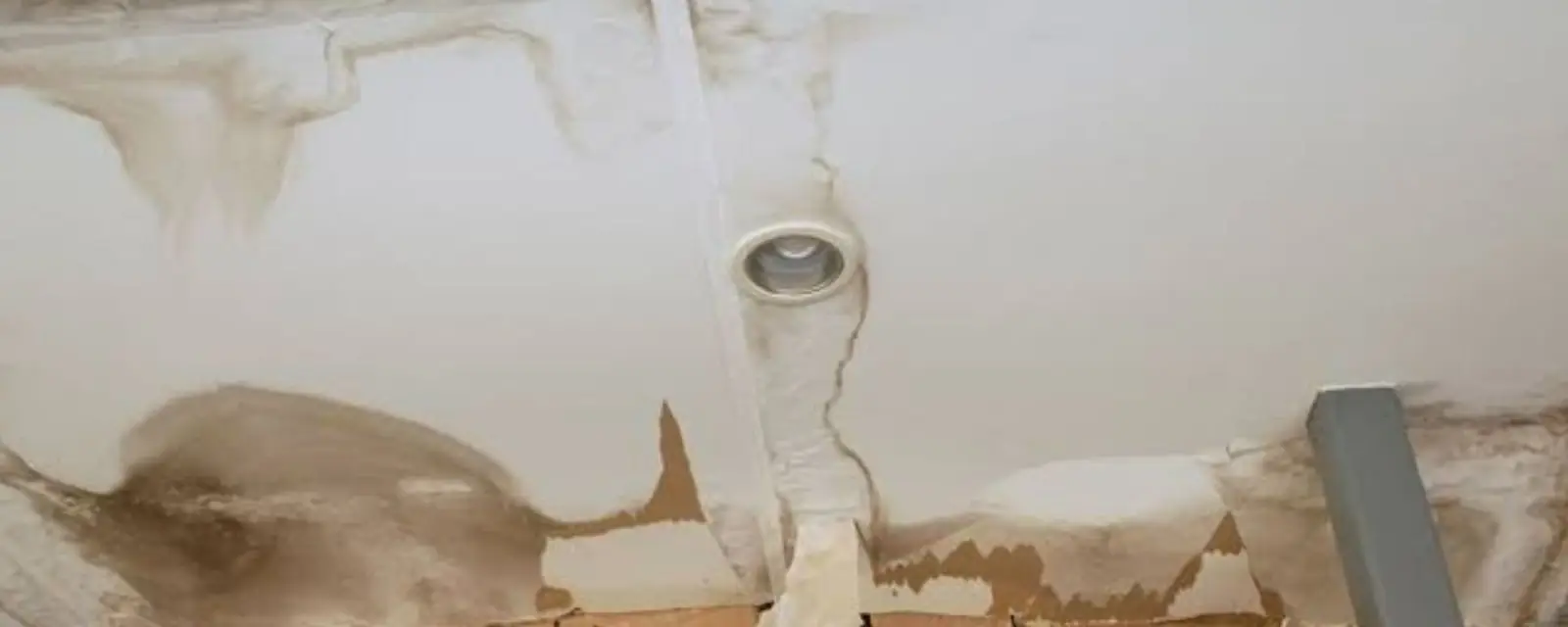
What actually sets the price of ceiling repair
No honest number can be given over the phone, because a ceiling stain can mean a small patch or a full section replacement. The cost follows the scope, and the scope follows the water category, the size of the affected area, the materials involved, the drying days and the rebuild work.
A real number needs an inspection with a moisture meter above and around the stain. We explain scope and price before work starts, and the crew shows you the readings behind it.
Think of the bill as four layers. The first is stopping the leak. The second is drying the wet area. The third is removing what cannot be saved. The fourth is rebuilding, which covers drywall, texture, paint and often attic insulation. Industry practice for water damage work is published in ANSI/IICRC S500.
What to do before you start
- Shut off the water above the ceiling if a supply line is the source.
- Keep out of rooms where a sagging ceiling is holding water.
- Switch off power to wet ceiling lights only if you can reach the panel from dry ground.
- Photograph the stain and the room above before anyone cuts into the ceiling.
Stain, sag and collapse are three different jobs
A dry stain with no softness is the lightest case. The leak may be old, the drywall can sometimes be sealed and painted, but the source still has to be confirmed as stopped. A sag means the drywall has absorbed water and lost strength, so it usually has to be cut out.
Collapse is the worst case. Wet insulation above the drywall adds heavy weight, and a ceiling that has begun to bulge can fall without warning. Keep people out from under a bulging ceiling, and a crew can drain it safely with small relief holes before removal.
The size of the damage above the ceiling also matters. A stain the size of a dinner plate can sit under a much larger wet insulation blanket. That hidden area is why the inspection starts in the attic when there is one.
The source of the leak changes the scope
A leaking roof, a failed supply line, an AC condensate overflow and an upstairs bathroom drain all damage ceilings differently. Roof leaks bring in outside water and may need roof repair first. A bathroom drain leak can bring in Category 2 water, which affects what can stay.
AC condensate usually produces slow, repeated wetting, and attic insulation can hold that moisture for weeks. Whatever the source, repair work above a ceiling that is still leaking only repeats the problem.
The table below lists the main cost factors and why each one changes the scope. It is a framework for reading an estimate, not a price list.
| Cost factor | Why it changes the scope |
|---|---|
| Water category | Category 2 or 3 water requires removal, not drying in place |
| Size of the wet area | Larger wet drywall means more removal, patching and paint |
| Insulation above | Wet insulation is removed and replaced, and adds attic labor |
| Drywall type and size | Full sheets, partial cuts and ceiling height affect labor |
| Texture | Popcorn, knockdown or orange peel must be matched, and blending can reach the whole room |
| Access | Attic access, stairs or tight rooms change labor time |
| Drying equipment and days | More wet area and slower drying mean more equipment days |
| Mold check | Visible growth adds containment and an assessment |
| Paint | A patch often means painting the whole ceiling for an even finish |
Dry first, then repair
Fixing the surface before the structure is dry traps moisture. New drywall and paint over wet insulation can bring stains back and feed mold. Crews dry the area with air movers and dehumidifiers and confirm readings before closing it up.
This is also why a quote that skips drying should raise questions. Ask what reading the crew will use to approve the area for repair, and when mold checking is part of the plan.
Drying time itself is a cost factor. A small wet area may need equipment for a few days, while a wide attic area with wet insulation can take longer. The longer the equipment runs, the more days appear on the scope.
Ceiling stained or sagging?
Call the 24/7 line. We can dispatch a crew and we explain scope and price before work starts.
Texture, paint and the finish you can see
Texture matching is the part homeowners notice most. A patch in a flat ceiling disappears easily, while popcorn or knockdown texture is harder to blend. Painters often prime the repair and repaint the entire ceiling plane to avoid a visible patch.
If your ceiling has older texture, ask the contractor how it will be matched and whether they have a sample to show. Our water damage repair work covers the rebuild side, and mold remediation applies if testing finds growth.
Access is the quiet cost driver. A ceiling over a stairwell needs scaffolding, and a ceiling with a tight attic hatch slows insulation work. Ask the contractor to list these items separately so you can see where the scope comes from.
North Richland Hills notes: permits and insurance tips
North Richland Hills runs an online E-Services PERMITS Portal for permits and inspections. We do not state which ceiling repairs need a permit, so ask the city building department before work begins, especially if framing or roofing is involved.
The Texas Department of Insurance advises homeowners to document the damage first, notify the insurer as early as possible and know that deadlines vary by policy. In practice, take photos of the stain and the attic before any cutting, and keep the failed part if a plumber replaces it.
What to keep for your insurer
Keep photos of the ceiling, the attic and the source of the leak. Save the written scope from the crew along with the moisture readings. Neighbors in Hurst and Haltom City follow the same documentation steps.
When you compare estimates, look for the same items in each one. Do they include drying, insulation, texture, paint and haul-away, or only the drywall? A lower line item that leaves out drying is not a smaller scope, it is a missing one.
Questions we hear from North Richland Hills homeowners
Only after the source is fixed and the area reads dry. Painting over a damp ceiling can trap moisture and the stain may return.
Stain-blocking primer hides the mark but does nothing about wet insulation above it.
They often involve roof repair first, attic insulation and a larger wet area. A scope depends on inspection, not on the source alone.
Usually the affected drywall is removed because wet drywall loses strength. A crew checks moisture to decide how far to cut.
Ask the city building department. The city has an online permits portal, and we do not state which repairs need one.
That depends on the cause and your policy. Document the damage, notify your insurer early and ask what your policy covers.
We do not promise that any claim will be approved. Keep the written scope and readings so your adjuster can review them.