The 24 to 48 hour rule and why it exists
The EPA advises drying wet or damp materials within 24 to 48 hours to prevent mold growth. That window is short, and it starts when the water arrives, not when you spot the stain. A pipe that leaked inside a wall overnight has already used part of it.
Mold needs moisture, so the plan is always the same. Stop the water, remove what is standing, then move air and lower the humidity until the materials read dry. Cleaning a moldy surface while the leak continues only resets the clock.
If you can answer yes to "is anything still wet to the touch after a day," call a crew. Our 24/7 line can dispatch one.
Which materials usually dry and which usually go
The industry standard for water damage restoration, ANSI/IICRC S500, sorts materials by how much water they absorb and how clean the water was. The table gives a practical starting view, not a verdict, because a moisture meter reading on your actual materials makes the call.
| Material | After a short, clean-water event | When it is more likely to be removed |
|---|---|---|
| Hardwood and laminate flooring | Often dried in place with controlled airflow | If boards cup, buckle or stay wet for days |
| Drywall | Can sometimes be dried if wetted briefly and not sagging | If it softens, crumbles, stains or has sat wet for days |
| Carpet | Frequently dried if lifted and extracted promptly | If the water was a sewer backup or flood water |
| Carpet pad | Rarely worth drying in place | Most of the time, because it holds water against the floor |
| Insulation in walls or attic | Fiberglass may dry if the cavity can be opened | If it is packed down, stained or has stayed damp |
| Framing and subfloor | Usually dries with equipment | If a moisture meter will not come down after drying |
| Upholstered furniture and mattresses | Sometimes cleaned if the water was clean and the response was fast | If they stayed wet or the water was contaminated |
Water from a sewer backup or from outside flooding is treated as contaminated, and porous materials that touched it are normally removed instead of dried. Your insurer may want to see them before disposal, so photograph first.
Early signs that mold is starting
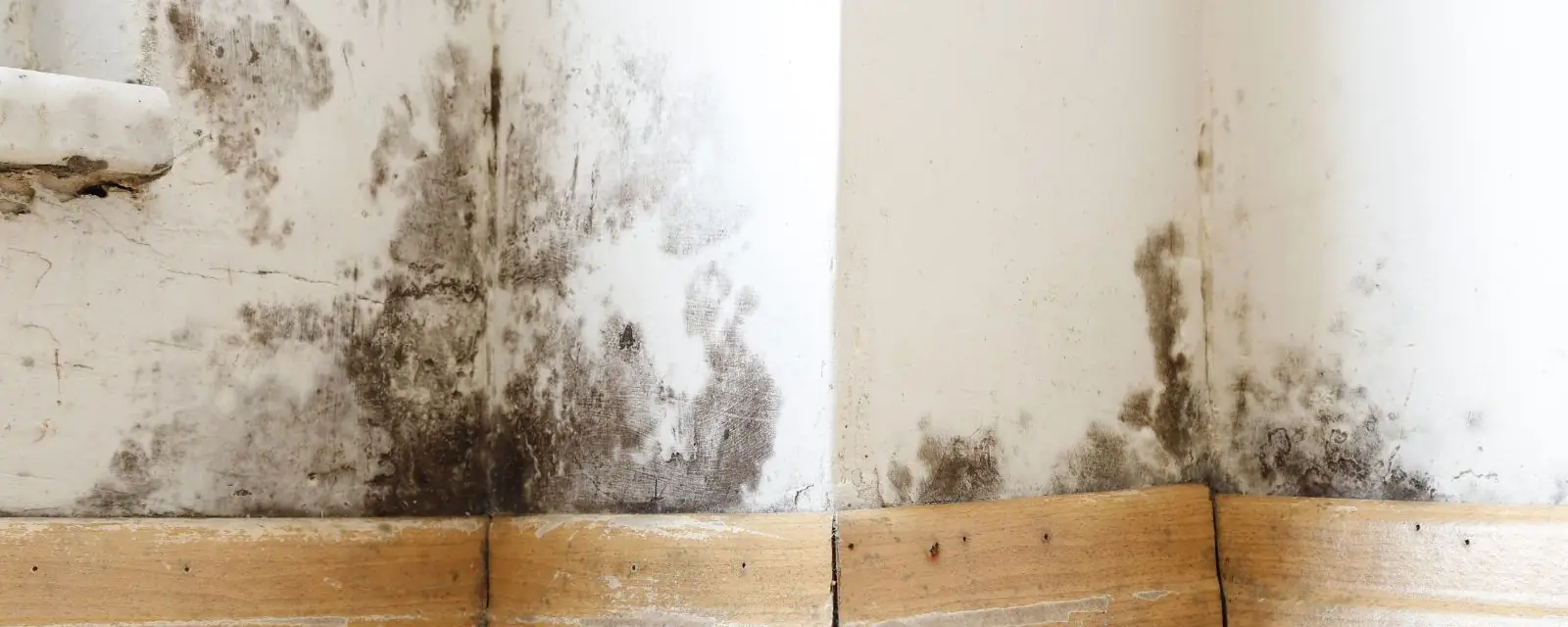
Mold rarely announces itself with a clean, obvious patch. It starts as a smell, a stain or a change in the surface, and it often hides behind baseboards, under flooring and inside cabinets. Look for these signs after any water event.
- A musty or earthy smell that returns when the room is closed up.
- Discoloration on drywall, ceiling tiles or baseboards, including spots that grow or darken.
- Cupped or lifted wood floorboards, which show moisture is still trapped below.
- Paint or wallpaper that bubbles, peels or feels damp.
- Condensation on windows or cold pipes in the room where water was.
- A soft or swollen spot at the base of a wall or cabinet.
Seeing one of these signs does not diagnose a mold problem, but it does mean moisture is still present. Any health question about exposure belongs with a physician, not a restoration crew.
Wet for more than a day?
Call the 24/7 line. Scope and price are explained before work starts, and the crew can begin extraction and drying.
What drying actually involves
Drying is not leaving a fan on. A crew starts with extraction of standing water, then opens wall cavities or lifts flooring if needed, and sets air movers and dehumidifiers based on moisture readings. Readings are taken again each visit, and equipment stays until the materials come down to a dry standard.
The water mitigation page covers the steps in order, and emergency water removal explains the first pass when water is still on the floor.
Keep the air conditioning set to run, close interior doors to the affected room if the crew asks you to, and do not use a household vacuum on wet carpet. Those small habits keep the moisture from spreading to dry rooms.
North Richland Hills weather and why drying cannot wait
The National Weather Service station at Dallas/Fort Worth lists a 1991 to 2020 normal of 37.01 inches of precipitation a year, so wet weeks are part of the local pattern. Roof leaks, window leaks and runoff against a foundation happen more than once in a typical year.
The same NWS page lists an average of 29 freezes per season, which is why supply lines in exterior walls and attics can split. A supply line that splits overnight can soak a ceiling and wall cavity before anyone is awake.
The city says its stormwater system carries runoff to creeks and channels, and that homeowners inside and outside floodplains can have drainage problems. If water is entering at ground level after rain, call Public Works at the number on the city page to discuss it, and call us for the drying.
When to call, and what to ask a mold company
Call a restoration crew when water has been present for more than a day, when a wet area is larger than you can dry with household fans, or when a musty smell stays after the surface looks dry. Call sooner for any water that came from a sewer line or from outside.
If mold is already visible, read about mold remediation first. Texas regulates mold assessors and remediators through the Texas Department of Licensing and Regulation, so ask whether the company holds the Texas license that applies to the work, and ask how the rules apply to your project. Mold testing and remediation follow the ANSI/IICRC S520 standard, and your scope should say which part of the standard it follows.
Whatever you choose, get the scope and price in writing before work starts.
Nearby cities, same clock
The 24 to 48 hour window is the same in Hurst and Haltom City, and so is our dispatch line. A pipe break in either town is dried the same way, and the signs to watch for after the water is gone do not change.
Questions we hear from North Richland Hills homeowners
The EPA advises drying wet materials within 24 to 48 hours to prevent mold growth, so treat that as the window. Conditions vary by room and material, so a crew reading moisture is more reliable than a calendar.
A small, clean wetting that is caught quickly can sometimes be dried with fans and a dehumidifier. If the drywall sags, stains or stays damp, it usually needs to be opened up and a meter used to check what is behind it.
A surface treatment does not fix the moisture that feeds mold, and it does not reach into porous material. Fix the leak and dry the area first.
The National Weather Service Dallas/Fort Worth 1991 to 2020 normal is 37.01 inches of precipitation per year. That is a reason to check roof, windows and drainage before the wet season, not after.
A physician. A restoration crew can find moisture and remove damaged materials, but it cannot answer medical questions.