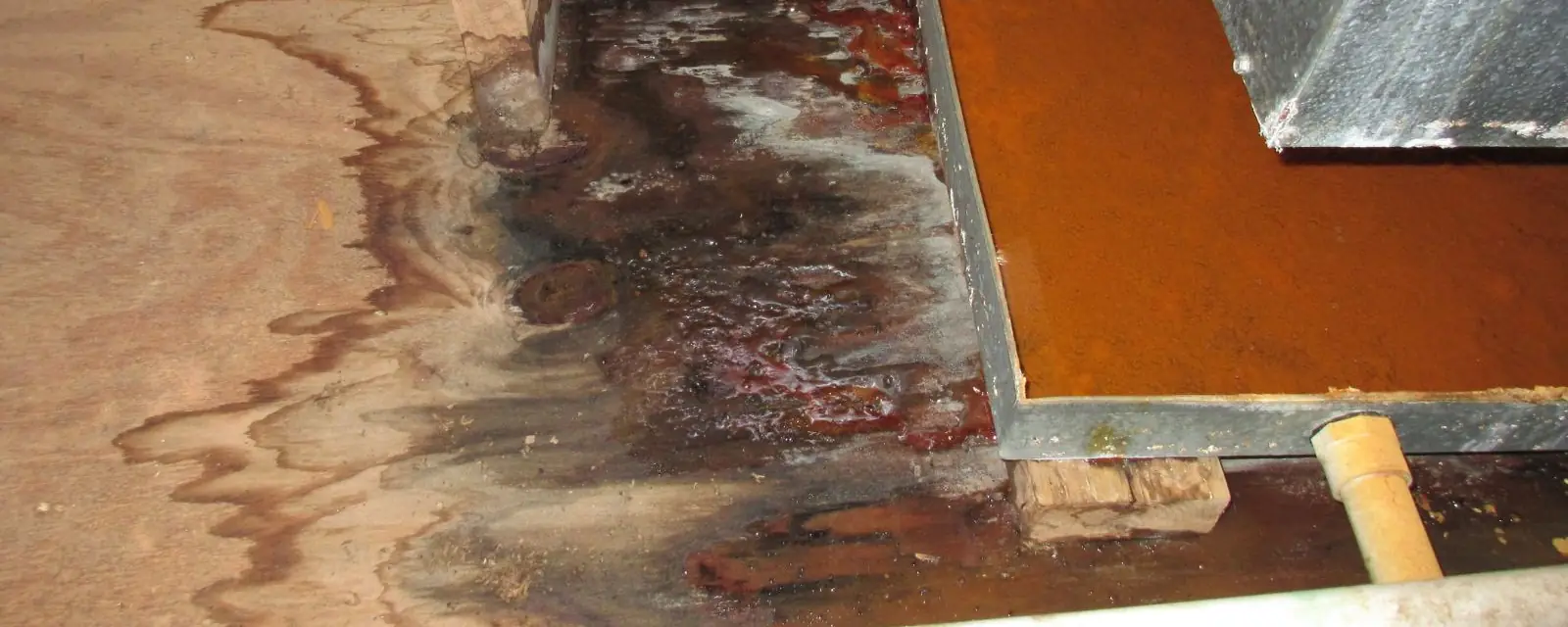
Dry the wood first, then decide what to repair
Water damaged wood can be repaired, but only after it is dry. Sanding, filling or painting wet wood locks moisture in and the damage returns. A moisture meter tells you when the wood is ready, and a screwdriver tells you whether it is still sound. Photograph the wood and note the date before you start.
Framing, trim, baseboards, subfloor, cabinets and furniture each react differently, so the right fix depends on the material and how long it stayed wet.
This page covers structural and finish wood in the rest of the house. Hardwood flooring has its own rules for cupping and buckling, and those are handled separately. ANSI/IICRC S500 is the published standard for professional drying.
Swelling, warping and rot are not the same
Swelling and warping mean the fibers took on water. They often relax as the wood dries, though some distortion stays. Rot is different. Fungus has broken down the wood, so it feels soft, crumbles or lets a screwdriver sink in easily.
Solid lumber tolerates a soaking far better than particleboard, MDF or thin veneer. Sheet goods swell at the edges and rarely return to shape.
Time matters here. Wood that is wet for a day or two usually recovers, while wood that stays wet for weeks is at risk for rot and mold.
| Material | Usually dries and stays sound? | Common repair |
|---|---|---|
| Framing studs and joists | Yes if firm and not rotted | Dry in place, sister or replace if soft |
| Solid wood trim and baseboards | Often yes | Dry, sand, refinish or replace short runs |
| Plywood subfloor | Sometimes | Dry, or cut out swollen or delaminated sections |
| Particleboard and MDF cabinets | Rarely | Replace swollen parts or the box |
| Solid wood furniture | Often yes | Dry slowly, then refinish |
How to test wood before touching it
Use a moisture meter on the surface and near the ends, since end grain absorbs fastest. Compare readings with a piece of the same kind of wood in a dry part of the house. Probe suspect areas with a screwdriver or awl, and note any soft spots, dark stains or musty smell.
A crew can also use a thermal camera to find wet areas behind finished surfaces. Write down the readings and the date so you can see the trend.
Do the same check again after drying equipment has run for a few days. A reading that keeps dropping tells you the wood is on its way back, and a reading that stalls tells you moisture is still coming from somewhere.
- Meter readings at several spots, including end grain and joints.
- A dry reference reading from similar wood elsewhere in the house.
- A screwdriver probe for softness at the edges and bottom.
- Check for musty odor, white fuzz or dark spotting.
- Look for swollen edges, split veneer and loosened joints.
- Photos before and after each step.
Wood still wet?
Call the 24/7 line. We can dispatch a crew and we explain scope and price before work starts.
Sistering, section replacement and sealing
If a stud or joist is wet but firm, the crew dries it and leaves it. If part is soft, the usual fix is sistering, which means bolting or nailing a new piece of lumber alongside the damaged one. Badly rotted members are cut out and replaced.
For trim and baseboards, replacing short runs is often simpler than saving them. Subfloor panels that have swollen at the seams are cut back to a joist and patched with matching thickness. Our water damage repair crews can handle these steps after drying, and structural questions belong with a licensed professional.
Cabinets deserve their own note. Solid wood doors and frames often dry and keep their shape, while particleboard boxes under a sink swell at the base and usually have to be replaced. Furniture follows the same logic, so a solid wood chair can be dried slowly and refinished while a veneered table may lift and bubble.
Refinishing and prevention
Once the wood reads dry, sand lightly, prime and seal with a finish suited to the room. End grain and cut edges benefit from sealer because they take on water first. Cabinet bases near sinks are the places most likely to be hit again.
If wood stayed wet for days, ask for a mold check before you close up the wall. See our mold remediation page for what to expect.
Prevention is mostly about the source. Fix the leak, replace old supply hoses, and keep gutters and grading directing rain away from the house. Wood that stays dry stays sound, and a yearly look under sinks, around the water heater and along exterior walls catches most problems early.
North Richland Hills notes: freezes, burst pipes and boil notices
The National Weather Service lists 29 freezes per season on average at Dallas/Fort Worth. Exposed pipes in attics, garages and exterior walls can split when temperatures drop, and the water often runs inside a wall for hours before anyone sees it.
In the February 2021 winter storm, the City of Fort Worth water utility reported 655 main breaks and 312,000 retail customers under a boil notice as of 6 a.m. on February 23. Those are Fort Worth figures and not North Richland Hills counts, but they show how widely a hard freeze can strain water systems.
For your home, locate the main shutoff before winter and wrap exposed lines. If a pipe bursts, shut off the water, then expect framing and baseboards to need moisture checks.
Serving nearby cities
The same dispatch line serves Colleyville and Haltom City. Wood behaves the same way in each, so the moisture checks above apply anywhere.
If you are unsure whether a framing member is still sound, do not guess. Photograph it, note the readings and ask a licensed professional to look before the wall is closed.
Questions we hear from North Richland Hills homeowners
Until a moisture meter reads close to a dry reference reading from similar wood. That can take days or weeks depending on thickness.
Rushing the repair is the most common mistake, since sealed wet wood cannot release its moisture.
Not always. Solid wood often relaxes as it dries, while particleboard and MDF usually stay swollen.
Attaching a new board alongside a damaged stud or joist to restore strength, instead of removing the whole member.
Only for small cosmetic spots in dry, sound wood. Soft or crumbling wood should be cut out and replaced.
Shut off the main, call a plumber and call a restoration crew for moisture readings in framing and insulation.
If water is near outlets or the panel, call 911 before touching anything. Keep photos of the split pipe and the wet wall for your insurer.