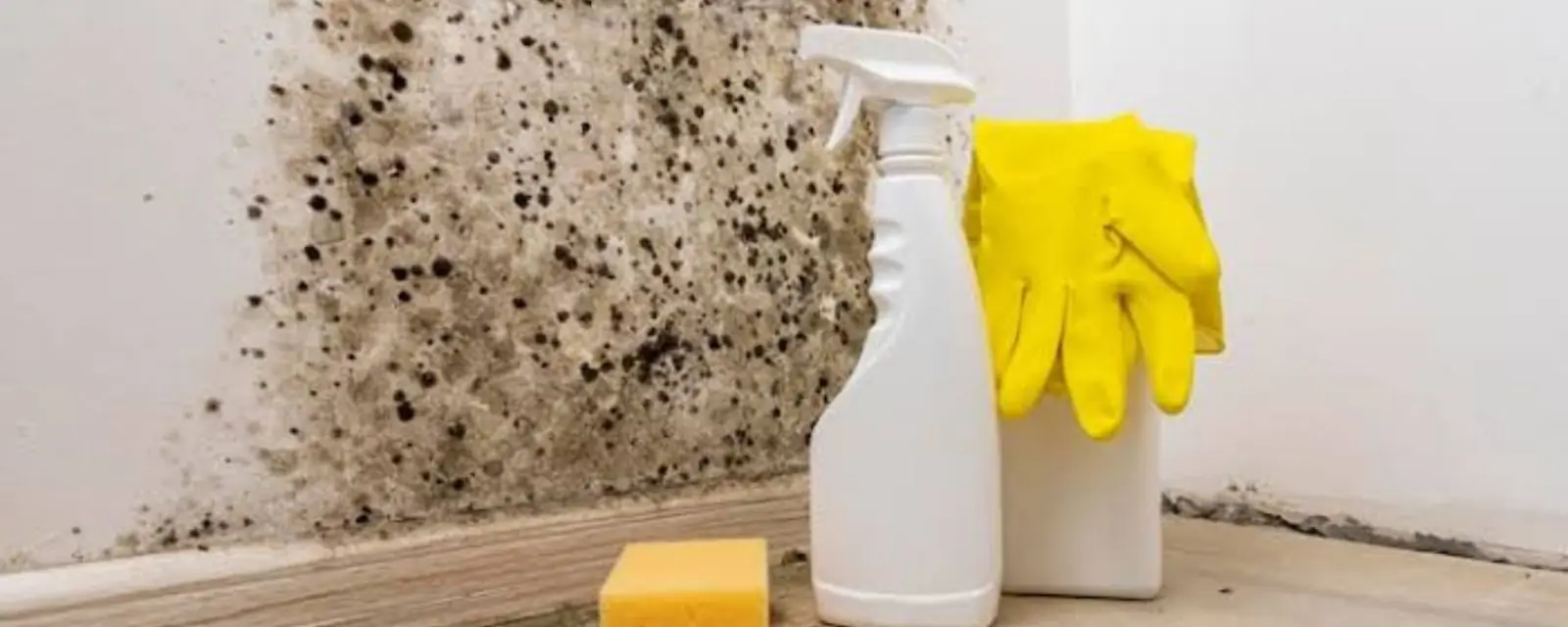
Surface growth or growth inside the wall?
You can reasonably wipe a small spot on a hard, sealed surface such as glossy trim, tile or grout, using detergent and water, then drying it fully. Painted drywall is a different case. Its paper face absorbs moisture, so growth that returns after cleaning, or drywall that feels soft, points to a problem inside the wall.
The rule that matters most is the source. Mold needs moisture, so a leak or a damp spot has to be fixed before any cleaning counts for much. Wiping a wall that is still wet behind the surface changes how it looks and nothing else.
Location gives clues too. Growth on an outside wall in a closet, behind a headboard or behind a sofa often points to cool surfaces and poor airflow. Growth under a window points to a seal or flashing problem, and growth near a bathroom points to steam and a slow plumbing leak.
What to check before you touch the wall
A few minutes of looking tells you which situation you have. Use a flashlight, and press gently on the wall with a gloved finger rather than scraping it.
- Look for the moisture source: a shower valve, window edge, supply line, drain or roof leak near the spot.
- Press the drywall. Soft, crumbly or swollen board means the damage is below the paint.
- Watch for paint that bubbles, peels or shows rings that look like growth stains.
- Note any musty smell that stays after the room airs out.
- Check the other side, such as the closet behind a bathroom wall or the back of a large dresser.
- Photograph everything before you clean, in case insurance or a repair estimate comes up.
If you find more than one of these signs, assume the wall needs to be opened. A bathroom corner that keeps returning is a classic example, since the cause is usually a moisture problem the surface cleaning never touched.
Wipe it or cut it out?
The table is a decision guide for common wall situations. It cannot replace an inspection, but it shows where the line usually falls.
| Situation | Reasonable response | Why |
|---|---|---|
| Small spot on sealed trim or tile grout, source fixed | Wipe with detergent and water, dry fully | Hard surface, growth stays on top |
| Spot on painted drywall that returns after cleaning | Have it inspected, likely cut out | Growth is rooted in the paper or the cavity |
| Soft, swollen or stained drywall | Cut out and contain | Material has absorbed moisture and cannot be cleaned |
| Growth on the back of a closet or behind furniture | Open the area and check the cavity | Hidden spots usually mean poor airflow or a leak |
| Large area or repeated return | Call a remediation crew | Containment and HEPA control are needed |
Wall soft or stained?
Call the 24/7 line. We can dispatch a crew, and scope and price are explained before work starts.
Why paint over mold fails
Paint hides color, and it does nothing about the moisture or the organic material underneath. Stain-blocking primers can cover a spot for a while, but the wall is still wet or still absorbing humidity. The film bubbles, peels or stains through again.
There is also a practical cost. A painted-over wall is harder to inspect, and anyone who buys the house later or an inspector will find it. Opening the wall, drying it and repairing it properly leaves a record you can show.
If you see a ring of new paint over an old stain, treat it as a sign the problem was handled cosmetically. Press on it, check it with a meter if you can borrow one and ask what happened before you paint again.
What a crew uses to find the real extent
Crews start with a moisture meter, which reads how wet drywall, wood and plaster are, either with pins or by scanning the surface. A thermal camera adds a picture, since damp areas often show as cooler patches. Neither tool names mold, but together they show where water is and how far it traveled. Readings are written down at the start, so the crew can compare them after drying.
When the wall has to come open, the crew seals the area with plastic, runs a HEPA air scrubber and cuts out the damaged drywall, usually past the visible edge of the stain. Framing is cleaned and dried before anything goes back. Mold work follows the ANSI/IICRC S520 standard.
North Richland Hills notes: older homes and older plumbing
North Richland Hills Public Works maintains about 379 miles of water mains and 292 miles of sewer lines. Those are the city's lines. The pipes and valves inside your walls are part of the house, so a slow leak behind drywall is yours to find, and an unexplained jump in your water bill is a reason to ask your water utility.
The city grew from 8,662 people in 1960 to over 70,000, and much of that growth happened decades ago, so a good share of homes are now older. Age alone does not cause mold, but older supply lines, shower valves and window seals have had longer to wear. When you are looking at a stained wall, plumbing and window edges deserve the first look.
After the wall is opened
Once the damaged drywall is out and the cavity is dry, the rebuild is ordinary carpentry: new board, tape, texture and paint. Water damage repair covers that stage, and it should start only after readings confirm the framing is dry. If the cause was a leak that soaked more than one room, water mitigation explains the drying that comes first.
The same steps apply for homeowners in Haltom City and Colleyville, since a wet wall behaves the same everywhere. A crew can help in either town, and the written scope should name the wall, the cavity and the finish work.
Questions we hear from North Richland Hills homeowners
Age does not cause mold, moisture does. Many homes here are decades old, and older pipes, valves and window seals have had more time to leak. Check those spots first when a wall stains.
A tiny spot that does not return may respond to detergent and water, but painted drywall absorbs moisture. If it returns, feels soft or sits near a leak, plan to have it inspected and likely cut out.
Bleach can lighten a stain without removing what is growing in porous material. For drywall, removal of the affected board plus drying is the usual approach.
Use a moisture meter reading, not touch. A wall can feel dry while framing behind it still holds moisture.
Not alone. Combine it with stains, soft drywall or a known leak, and have a crew take readings before cutting.