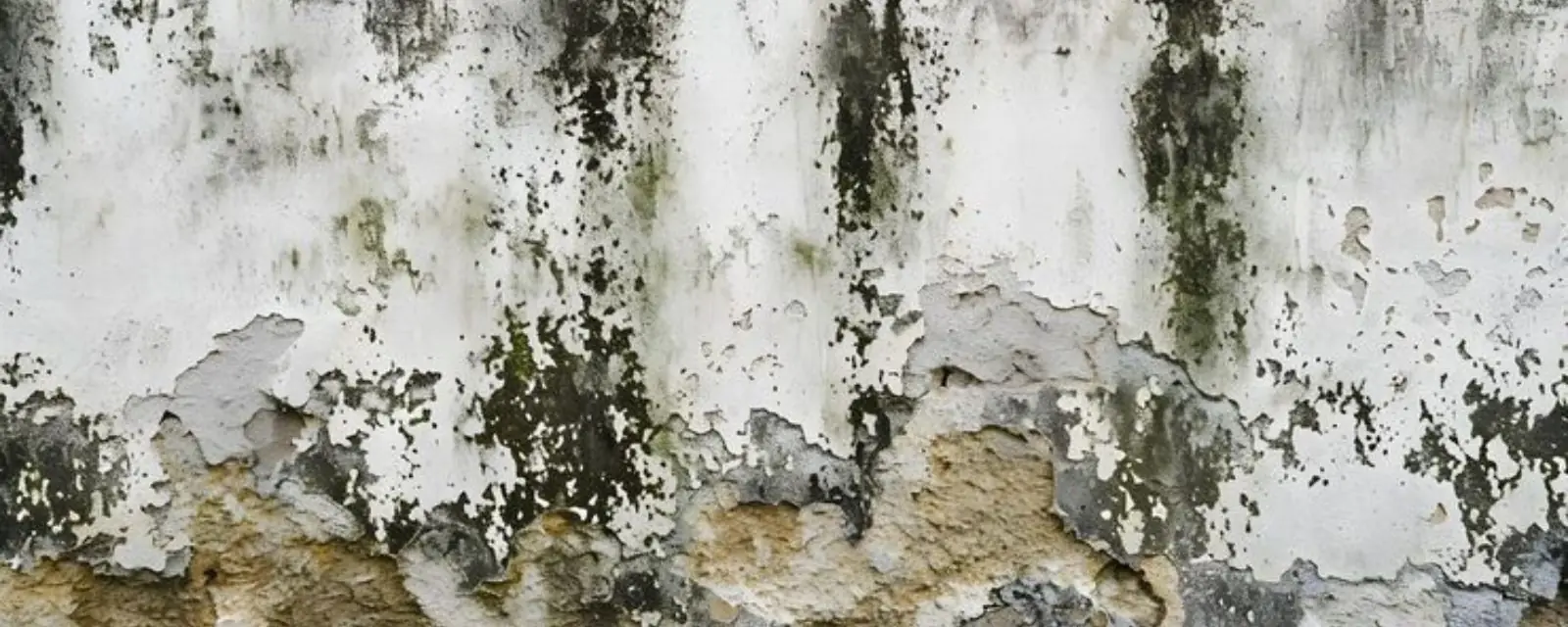
What people mean by black mold
Most of the time, black mold means any dark growth on a wall, ceiling, window frame or under a sink. Color does not tell you the species, and it does not tell you how risky a patch is. Growth that looks black can belong to several kinds, and a laboratory is the only place that sorts them out.
For a homeowner, the useful question is where the growth is and why it is there. Mold needs moisture, so the answer is nearly always a leak, condensation or a humidity problem. Questions about health belong with a physician, since a restoration company cannot assess them.
Typical places to find dark growth include the ceiling under a roof leak, the wall around a shower, the area behind a toilet, the underside of a sink cabinet and the corner of an outside wall. Each one has a water source nearby, which is the clue that matters.
Why a test alone does not fix anything
A sample can tell you what is present at the spot and the time it was taken. It does not remove anything, and it does not stop the water. If you can see growth and you know where the leak is, a test often adds cost and delay without changing the work.
Testing is more useful when the source is unclear or when you want a separate record before and after cleanup. Mold testing and remediation follow the ANSI/IICRC S520 standard, and your scope of work should say who performs each part.
One more point about testing. A clean result from one spot does not clear the rest of the house, and a positive result does not tell you how to fix the leak. The repair, the drying and the removal still have to happen, and they are the part of the job that changes your home.
The removal order that works
First, stop the moisture. Repair the leak, dry the area and bring indoor humidity down. Second, contain the work area with plastic sheeting so disturbed spores do not travel through the house, and run a HEPA air scrubber.
Third, remove porous materials that carry growth, such as drywall, insulation, ceiling tile and carpet pad. Fourth, clean framing and hard surfaces with HEPA vacuuming and damp wiping. Fifth, verify with moisture readings and a visual check before containment comes down.
Skipping a step makes the job unreliable. Cleaning before the leak is fixed, or removing material without containment, is how a small patch becomes a larger one.
Drying and humidity after removal
Removal is only half the work. After cutting out material and cleaning, the framing and the room need to dry, and indoor humidity should stay moderate afterward. A dehumidifier, a bathroom fan that vents outside and a fixed leak do more to prevent a repeat than any spray.
Keep an eye on the area for the next few weeks. New staining, a musty smell or paint that starts to bubble means moisture is still arriving, and the crew should be called back to look for it.
Dark growth on the ceiling or wall?
Call the 24/7 line. We can dispatch a crew, and scope and price are explained before work starts.
What not to do
A few common reactions spread the problem or hide it. Avoid every item below until a crew has looked at the area.
- Do not spray bleach on drywall. It lightens the stain on the surface and leaves the porous material in place.
- Do not dry sweep or scrub growth. Dust and spores go airborne and settle in other rooms.
- Do not point fans at the area, since moving air carries spores through the house.
- Do not paint over the spot. Paint covers color, not the moisture or the growth underneath.
- Do not use the home's heating and cooling system while demolition is under way near vents.
- Do not tear out large sections of wall without containment.
If the patch is small and on a sealed hard surface, wiping with detergent and water is reasonable. Anything on drywall, ceiling board or insulation deserves a closer look first.
North Richland Hills notes: Texas rules and local rainfall
The Texas Department of Licensing and Regulation says SB 1255 took effect September 1, 2025, and removed mycotoxins from the legal definition of mold. That is a change to the legal definition used in the state mold program. It tells you nothing about the growth in your house, and TDLR says current rules remain in effect until new rules are adopted, so the rules in force today still apply.
Ask whether a company holds the Texas license that applies, and ask TDLR how the rules apply to your project.
The National Weather Service lists the Dallas/Fort Worth annual precipitation normal at 37.01 inches. Water that size reaches roofs, windows and foundations all year, so after a wet spell, check ceilings below the roofline, window sills and the walls of closets for new stains.
When to bring in a crew
Call a crew when growth covers more than a small spot, when drywall is soft, when the smell returns after cleaning or when you cannot find the moisture source. Bring photos and a short history of the leak if you have one. The crew will measure moisture and write a scope you can compare.
Our mold remediation line dispatches crews, and the same steps apply in Keller and Hurst. If a leak soaked the structure first, water damage cleanup covers the debris and drying stage. We never promise that mold will not come back. We can promise a written scope and an explanation of price before work starts, and that the moisture source is part of the conversation.
Questions we hear from North Richland Hills homeowners
SB 1255 took effect September 1, 2025, and removed mycotoxins from the legal definition of mold. TDLR says current rules remain in effect until new ones are adopted. Ask TDLR how the rules apply to your project.
Color does not tell species or risk. Any visible growth should be treated the same way, and health questions belong with a physician.
Vinegar may clean a small spot on a hard surface. It does not remove growth from drywall, and it does nothing about the moisture source.
Look for dry readings on moisture meters, clean surfaces and no musty smell. A crew should document the check before taking containment down.
Nobody can promise that. If the moisture source is fixed and the area stays dry, the conditions for growth are gone. If it gets wet again, the risk returns.