Drying ends when the readings say so
Structural drying after water damage often takes several days, and we will not promise a number before a crew has measured the building. The job ends when moisture readings in the drywall, framing and flooring return to a dry standard for those materials. A calendar date does not tell you that.
The industry reference is ANSI/IICRC S500, the published standard for water damage restoration. It treats drying as a measured process. Crews take readings at the start, check them on repeat visits and stop equipment only when the numbers support it.
What speeds drying up and what slows it down
Several factors push the timeline in either direction. The table sets them side by side.
| Factor | Slows drying | Speeds drying |
|---|---|---|
| Water category | Contaminated water means more removal of materials | Clean supply line water with fast extraction |
| Materials | Thick hardwood, plaster, insulation, carpet pad | Thin drywall, tile, vinyl |
| Wet area | Water spread across several rooms and under floors | A contained patch |
| Airflow | Furniture against walls, closed doors | Air movers aimed along wet surfaces |
| Humidity | Damp, muggy air that holds moisture in materials | Dehumidifiers pulling moisture from the air |
| Start time | Water sitting for days before extraction | Extraction within the first hours |
The usual sequence: extraction, drying, verification
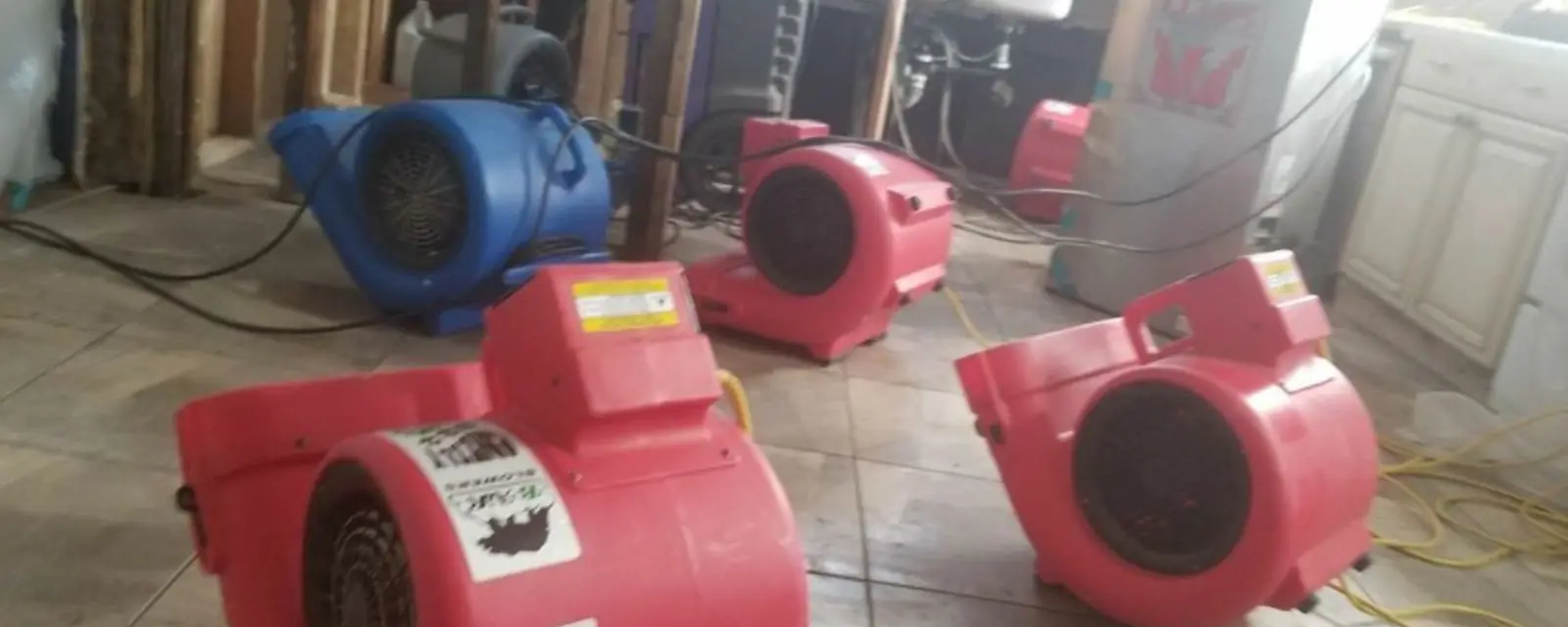
Extraction comes first, because standing water and wet carpet cannot be dried by air alone. Pumps and extractors pull out what they can, and wet carpet pad is often removed. Then the crew sets air movers and dehumidifiers, and the space is closed up so the equipment dries the building, not the whole house.
Verification is the last stage. The crew compares readings against dry reference points, often from an unaffected part of the home. If a wall or floor still reads wet, the equipment stays.
Between visits, you can help by keeping doors and windows closed in the drying area, leaving equipment running and keeping pets and children away from cords and hot air exhaust. Turning equipment off early is a common reason a job has to be redone.
Water still on the floor?
Call the 24/7 line. We can dispatch a crew, and scope and price are explained before work starts.
Equipment on a drying job
Air movers push dry air across wet surfaces. Dehumidifiers, usually LGR types that handle high moisture loads, pull water vapor out of the air so materials keep releasing it. Moisture meters read wetness in wood and drywall, and thermal cameras show cooler, damp areas that the eye misses.
None of this equipment works well alone. Air movers without a dehumidifier just shuffle damp air, and a dehumidifier without airflow dries only the air around it. Crews adjust placement as readings change, moving a unit from a room that has finished to one that has not. If you need extraction first, emergency water removal covers it, and water mitigation explains the drying that follows.
Why it feels dry misleads
Surfaces dry first. A floor can feel dry to your hand while the subfloor underneath still holds water, and a painted wall can feel cool and normal while the cavity behind it is wet. Touch tells you very little about what is inside.
Moisture left in place invites mold growth and can warp or loosen flooring later. That is why a crew insists on a final reading, and why mold remediation often starts with a drying job that ended too early.
Humidity can fool you as well. A house that smells damp, shows window condensation or has a warped baseboard may still be drying, even if the standing water is long gone. Ask for readings before you agree the job is over.
Questions to ask while drying is under way
A short list keeps you informed without hovering over the crew. Write the answers down on the first visit, since readings change from day to day and the starting numbers are the ones everything else is compared against.
- What were the starting readings, and which materials were measured?
- What target reading counts as dry for each material?
- How often will the crew return to check and record readings?
- Which rooms are being dried, and which should I keep doors closed for?
- What happens if a wall still reads wet at the end of the planned visit?
- Will I receive the log of readings and equipment when the job closes?
North Richland Hills notes: rainfall, freezes and stretched crews
The National Weather Service lists a Dallas/Fort Worth annual precipitation normal of 37.01 inches and an average of 29 freezes per season. Freezes put stress on pipes, and rain tests roofs, so water losses come in waves. When a wave hits, crews and drying equipment get stretched, which is why calling early matters.
February 2021 is an example from Fort Worth's own utility. As of 6 a.m. on February 23, the Fort Worth water utility reported 655 main breaks and 312,000 retail customers under a boil notice.
We are not saying North Richland Hills saw those counts. We are saying a regional event can send thousands of households after the same equipment at once, so you should get in the queue early. Photograph the damage and shut off the water first, and the crew can start documenting on arrival.
Nearby towns follow the same process
Drying works the same in Hurst and Haltom City, and the same line dispatches crews there. The readings, the equipment and the final verification do not change at a city line, although each city runs its own water and drainage systems. If the water came from outside the house, flood damage restoration covers the extra cleanup.
Questions we hear from North Richland Hills homeowners
Freezes break pipes across the whole region at once. In February 2021, Fort Worth's water utility reported 655 main breaks, and crews and equipment are stretched when many homes flood at the same time. Call early.
Household fans help a little on surface dampness. They do not pull moisture out of the air or the structure, so they are not a substitute for dehumidification.
Ask the crew. They may want it adjusted to control temperature and humidity for the equipment.
The crew should show readings that match dry standards for each material and a record of the visits. Ask for the log when the job ends.
It depends on the water category, how long it stayed wet and what readings show. A crew can often dry clean-water drywall in place and cut out what will not recover.